【引言】
茶叶深加工、茶饮料厂、茶叶产业园生产过程中,会持续产出大量湿茶渣。这类农林固废处理起来十分棘手,随意堆放极易发酸霉变,不仅占用厂区空间,还容易滋生蚊虫、引发环保问题。依托低温烘干工艺,金万泓三回程茶叶渣专用烘干机,针对性解决茶渣纤维抱团、受热易失活的痛点,在保障物料活性的前提下完成脱水,把废弃茶渣转化为可利用资源。
In tea deep-processing plants, tea beverage factories and tea industrial parks, substantial volumes of wet tea residue are continuously generated during production. This type of agricultural and forestry solid waste is difficult to dispose of. Random stockpiling quickly leads to souring and mildew, occupies factory space, breeds mosquitoes and insects, and triggers environmental compliance issues. With a low-temperature drying process, Jinwanhong’s three-pass dryer specially developed for tea residue targets the industry pain points of fibrous agglomeration and heat-induced deactivation of tea residue. It achieves dehydration while preserving material activity, turning waste tea residue into reusable resources.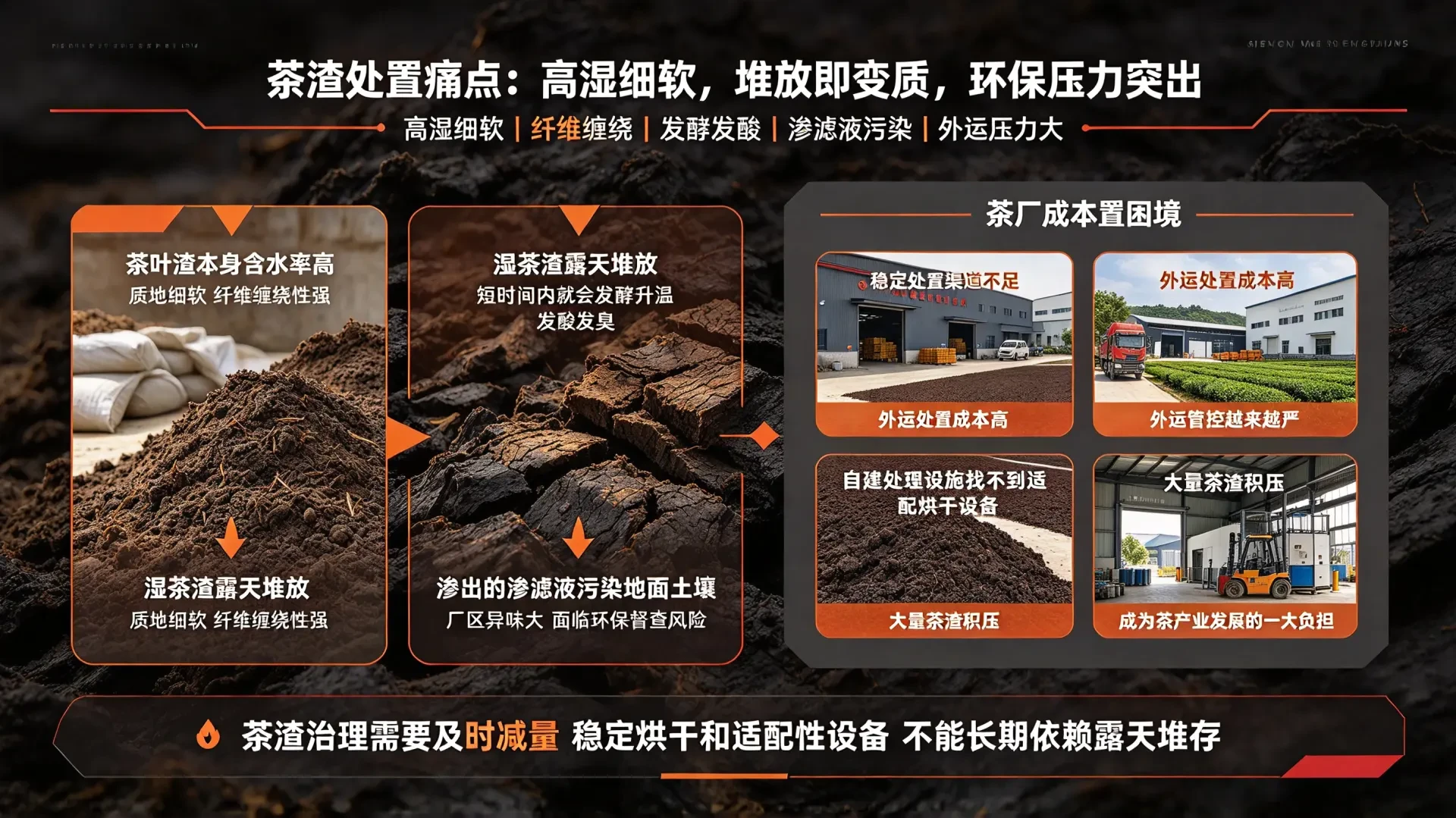
一、茶渣处置痛点:高湿细软,堆放即变质,环保压力突出
茶叶渣本身含水率高、质地细软、纤维缠绕性强。湿茶渣露天堆放,短时间内就会发酵升温、发酸发臭,渗出的渗滤液污染地面土壤,厂区异味大,面临环保督查风险。很多茶厂苦于没有稳定的处置渠道,外运处置成本高、外运管控越来越严,自建处理设施又找不到适配的烘干设备,大量茶渣积压,成为茶产业发展的一大负担。
I. Difficulties in Tea Residue Disposal: High Moisture, Fine Texture, Rapid Deterioration and Severe Environmental Pressure
Tea residue features high moisture content, fine texture and highly intertwined fibres. When wet tea residue is stockpiled in the open air, it ferments and heats up rapidly, turning sour and malodorous. Leachate contaminates soil and ground surfaces, causing strong odours on-site and exposing enterprises to environmental inspection risks.
Many tea manufacturers struggle to find reliable disposal channels. Outsourcing disposal is costly and subject to increasingly strict transport controls. Meanwhile, suitable drying equipment is hard to source for in-house treatment. Piled-up tea residue has become a major burden for the tea industry.
二、传统处理方式短板明显,制约茶渣资源化利用
1.自然晾晒:需要大面积晾晒场地,受阴雨天气影响极大;茶渣表层晒干、内部依旧潮湿,干湿差异大,霉变风险难以根除,规模化茶厂完全不适用。
2.简易单筒高温烘干:物料停留时间不好把控,局部温度过高,直接破坏茶渣内部茶多酚等营养物质;纤维抱团不易散开,成品结块严重,水分波动大,后续做饲料、有机肥加工品质不稳定,产品价值大打折扣。
想要保留茶渣营养成分、稳定出料品质,就需要适配茶渣物料特性的专用烘干工艺。
II. Drawbacks of Conventional Treatment Methods Restricting Resource Utilisation
Natural sun drying: Requires large drying yards and is heavily affected by rainy weather. The surface of tea residue dries while the interior remains damp, resulting in uneven moisture and persistent mildew risks. It is completely impractical for large-scale tea factories.
Simple single-cylinder high-temperature drying: Material residence time is hard to control. Local overheating directly destroys active substances such as tea polyphenols in tea residue. Fibres tend to clump together, forming heavily agglomerated finished products with unstable moisture. When further processed into feed or organic fertiliser, quality fluctuates greatly and commercial value drops sharply.
Preserving nutrients and stable output quality demands a dedicated drying process tailored to the properties of tea residue.
三、三回程循环换热核心技术,节能优势显著
金万泓三回程茶叶渣烘干机采用三层套筒逆流换热结构,热风与物料逆向充分接触,热量层层复用,热效率可达 75%,相比普通单筒烘干设备节能 35% 以上。 物料在筒内往复折返,烘干行程更长,升温平缓,属于温和低温烘干模式,不会瞬间高温灼烧物料,最大限度保留茶渣中的营养组分,烘干后的茶渣品相好,营养损耗低,满足饲料添加的品质标准。
III. Core Technology of Three-pass Counterflow Heat Exchange with Outstanding Energy-saving Performance
Jinwanhong three-pass tea residue dryers adopt a three-sleeve counterflow heat exchange structure. Hot air makes full contact with materials in reverse flow, and heat is recycled layer by layer. The thermal efficiency reaches 75%, saving over 35% energy compared with ordinary single-cylinder dryers.
Materials travel back and forth inside the cylinders for an extended drying path. Heating proceeds gently in a mild low-temperature drying mode, avoiding instantaneous high-temperature scorching. Nutrients in tea residue are retained to the maximum extent. The finished tea residue boasts good appearance and minimal nutrient loss, meeting quality standards for feed additives.
四、专用打散扬料板结构,防抱团、防粘筒,水分可控稳定
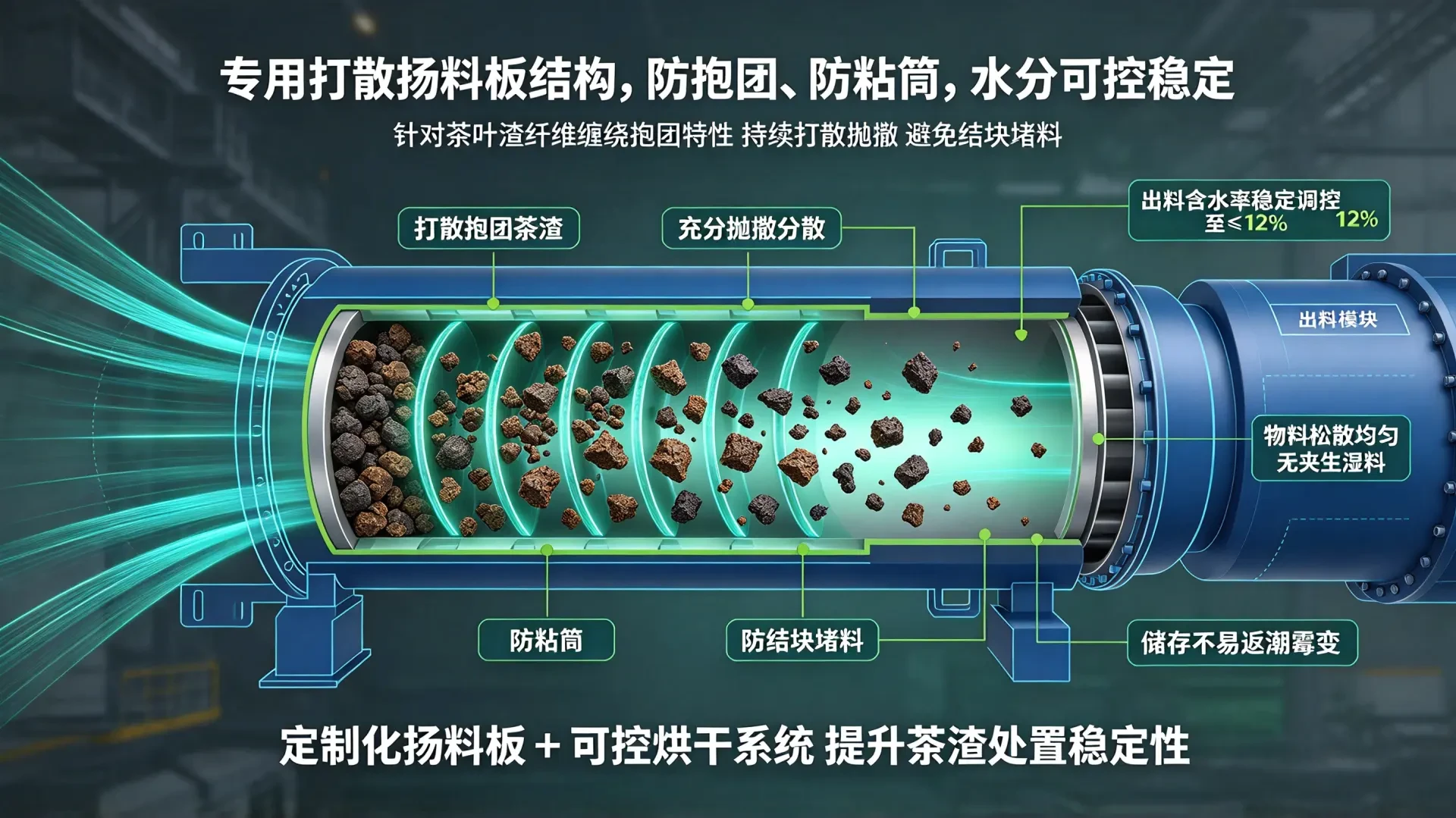
针对茶叶渣纤维容易缠绕抱团的物料特性,设备定制化设计打散扬料板。在筒体转动过程中持续打散抱团茶渣,将物料充分抛撒分散,避免纤维粘连筒壁、结块堵料。整套烘干系统可控性强,出料含水率可稳定调控至≤12%,物料松散均匀,没有夹生湿料,后续储存不易返潮霉变,方便长期存放和转运深加工。
IV. Specialised Lifting and Breaking Plates: Anti-agglomeration, Anti-sticking and Stable Moisture Control
Custom breaking and lifting plates are designed to address the tendency of tea fibres to intertwine and form clumps. As the cylinder rotates, the plates continuously break up agglomerated tea residue and throw materials into full dispersion, preventing fibre adhesion on the cylinder wall and material blockage.
The whole drying system offers high controllability. Outlet moisture can be steadily regulated to ≤12%. The material is loose and uniform without partially wet cores. It resists moisture reabsorption and mildew during storage, facilitating long-term stockpiling, transportation and further processing.
五、烘干茶渣三大资源化方向,变废为宝提升附加值
经过脱水处理后的干茶渣,应用场景丰富,帮助茶厂把废弃物变成收益原料:
✅ 畜禽饲料添加原料:保留茶多酚、粗蛋白,作为饲料添加剂,提升畜禽免疫力,饲料厂、养殖场需求量稳定;
✅ 有机肥发酵原料:碳氮比合适,是优质有机肥辅料,和粪污协同发酵,生产高端生态有机肥;
✅ 生物质燃料:干茶渣热值稳定,可作为生物质锅炉燃料,满足厂区自用供热需求,降低燃料采购成本。
一条烘干产线,给茶渣预留多条变现出路。
V. Three Major Resource Utilisation Routes for Dried Tea Residue to Boost Added Value
Dehydrated dry tea residue has a wide range of applications, allowing tea factories to convert waste into profitable raw materials:
✅ Raw material for livestock and poultry feed additives: Retains tea polyphenols and crude protein. Used as feed additives to boost animal immunity, with steady demand from feed mills and farms.
✅ Fermentation raw material for organic fertiliser: Boasts a suitable carbon‑nitrogen ratio and serves as a high-quality auxiliary material for organic fertiliser. It can be co-fermented with manure to produce premium eco-friendly organic fertiliser.
✅ Biomass fuel: Dry tea residue delivers stable calorific value and can fuel on-site biomass boilers to meet factory heating demands and cut fuel procurement costs.
One drying line unlocks multiple revenue streams for tea residue.
六、成套一体化产线定制,适配茶厂、茶叶产业园落地
不只是单机供应,金万泓可提供整套茶叶渣处理生产线方案,包含自动上料系统、三回程烘干主机、除尘净化系统、出料输送、成品仓储配套设备,实现从湿渣入料、烘干、粉尘收集到干料入库全流程自动化。可以根据茶厂日产茶渣量、厂房布局、环评要求做非标规划,适配中小型茶加工厂,也适合大型茶叶产业园集中固废处理中心建设。
VI. Customised Integrated Production Lines for Tea Factories and Industrial Parks
Beyond standalone machines, Jinwanhong supplies complete tea residue treatment production lines, including automatic feeding systems, three-pass drying main units, dust removal and purification systems, discharge conveyors and finished product silos. The full workflow from wet residue feeding, drying and dust collection to dry material warehousing is automated.
Non-standard design is available based on daily tea residue output, workshop layout and EIA requirements. The equipment suits small and medium tea processors as well as centralised solid waste treatment centres in large tea industrial parks.
七、低温节能工艺,契合绿色改造、农林固废项目申报标准
整套设备能耗低、密闭负压运行,粉尘集中收集,无无序废气外溢。低温烘干工艺符合低碳节能发展方向,属于农林废弃物循环利用装备,满足产业园绿色升级、种养循环、固废资源化项目申报的设备准入条件,部分地区可对接相关补贴政策。
VII. Low-temperature Energy-saving Process Qualified for Green Renovation and Agricultural Waste Project Applications
The complete line features low energy consumption and operates under sealed negative pressure. Dust is collected centrally without disordered exhaust leakage. The low-temperature drying technology aligns with low-carbon development goals. As equipment for agricultural and forestry waste recycling, it meets the access criteria for industrial park green upgrading, planting-breeding circular economy and solid waste resource utilisation projects. Subsidies are available in some regions for qualified applications.
八、现场投产实测:人工省、产能稳,长效解决茶渣环保难题
已有多家茶厂、茶叶深加工企业的三回程茶渣烘干产线稳定投产。产线自动化程度高,正常运行仅需单人值守,设备可长时间连续运转,稳定消化每日产出的湿茶渣。从根源消除茶渣堆积霉变、异味渗滤液等环保隐患,不用再依赖高价外运,实现厂区内部就地资源化处置,环保达标同时挖掘附加收益。
VIII. Field Operation Results: Low Labour Input, Stable Capacity and Long-term Solution to Environmental Risks of Tea Residue
Multiple tea factories and tea deep-processing enterprises have stable running three-pass tea residue drying lines. Highly automated, the line normally only requires one on-duty operator. Continuous long-hour operation reliably digests daily wet tea residue output.
It fundamentally eliminates environmental hazards such as piled mildew, odour and leachate. Enterprises no longer rely on expensive outsourced disposal and realise on-site resource utilisation. Environmental compliance is achieved while additional economic benefits are unlocked.
结语
如果你是茶厂、茶叶深加工企业,正被大量湿茶渣堆积、处置难的问题困扰。金万泓机械可根据你的日处理量、后续用途定制茶叶渣烘干成套方案,配套环评相关设备资料。
If you run a tea factory or tea deep-processing enterprise and are troubled by stockpiled wet tea residue and disposal difficulties, Jinwanhong Machinery can design a complete tea residue drying solution tailored to your daily throughput and downstream usage, together with supporting documentation for EIA submission.