【引言】
很多养殖场都有一个误区:设备买回家,就算完成粪污资源化。真正投产之后才发现:设备不贵,运行贵。
同样是鸡粪烘干设备,有人吨料处理成本极低、稳定盈利;有人能耗居高不下、故障频繁、干粪利润全被燃料费、维修费吃掉,甚至越烘越亏。
鸡粪烘干想要赚钱,核心从来不是“能不能烘干”,而是能不能低成本、稳定、长效烘干。设备硬件只占三成,剩下七成收益,全靠热源搭配、进料管控、日常运维细节把控。今天从实战角度,拆解养殖场专属降本方案,手把手把综合运行成本压到行业低位。
Many farms hold a misunderstanding: once equipment is purchased, manure resource utilisation is considered complete. Only after formal commissioning do they find out: the machine itself is affordable, yet operation comes with high costs.
Even with identical chicken manure dryers, some operators achieve ultra-low processing costs per tonne and steady profits, while others struggle with excessive energy consumption, frequent breakdowns. All revenue from dried manure gets eaten up by fuel and maintenance fees, and they may even suffer losses from drying operations.
To make chicken manure drying profitable, the core question is never “whether drying is possible”. It lies in achieving low-cost, stable and long-term drying. Hardware accounts for only 30% of the returns; the remaining 70% depends entirely on heat source matching, feedstock control and fine daily operation & maintenance. Today, we break down farm-specific cost-reduction strategies from a practical perspective to help drive comprehensive operating costs down to industry-leading levels.
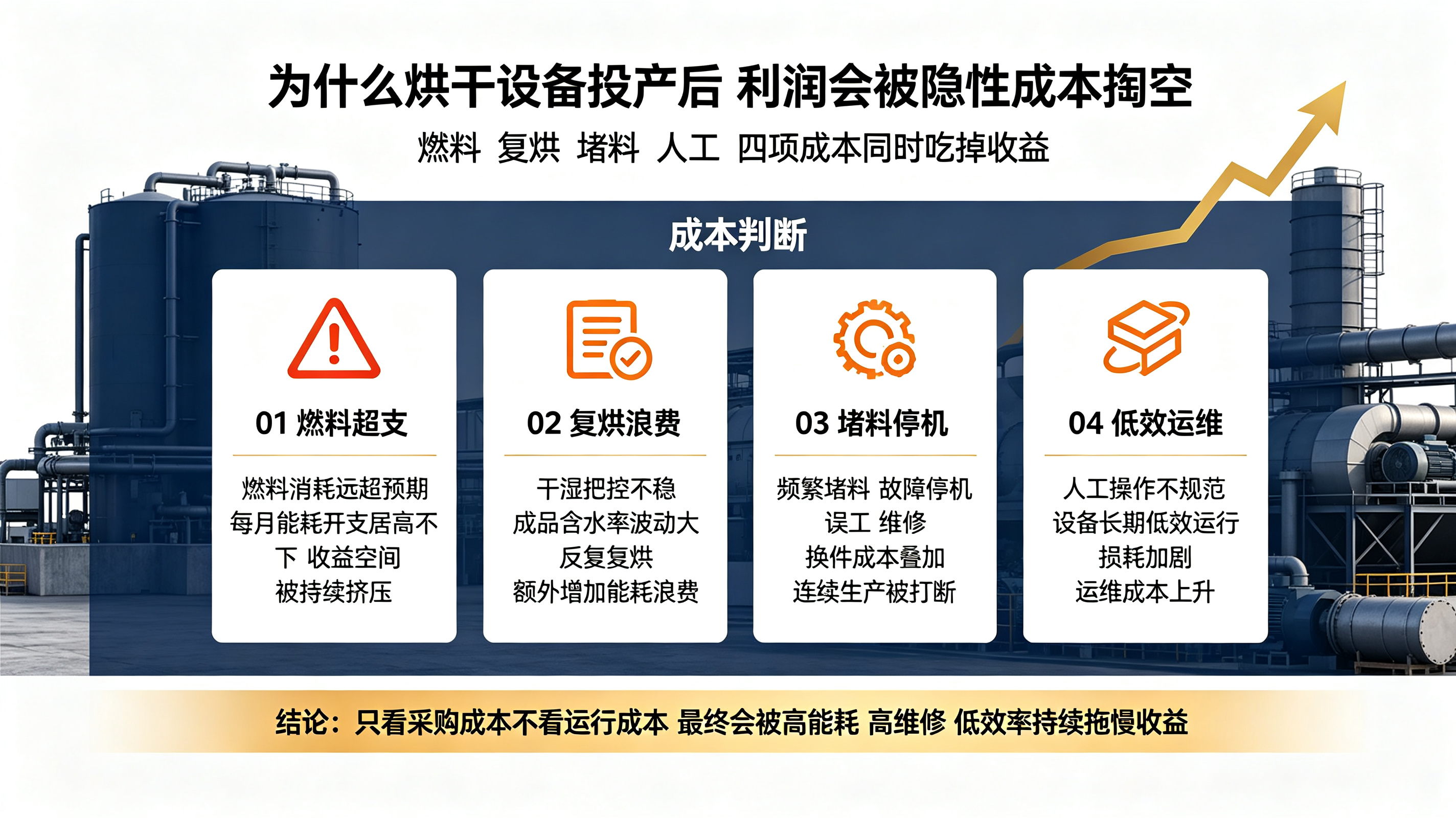
一、行业普遍现状:设备投产即高能耗,利润被隐性成本掏空
大量养殖场新设备投产初期,普遍面临这些问题:
✅ 燃料消耗远超预期,每月能耗开支居高不下;
✅ 干湿把控不稳,反复复烘,额外增加能耗浪费;
✅ 频繁堵料、故障停机,误工、维修、换件成本叠加;
✅ 人工操作不规范,设备长期低效运行,损耗加剧。
很多人只算了设备采购成本,却忽略了长期运行的燃料、人工、维保、损耗成本。看似设备回本快,实则被高能耗持续拖慢收益,烘干赚钱的红利,全部耗在无效运维上。
I. Common Industry Reality: High Energy Consumption Right After Commissioning, Profits Eaten by Hidden Costs
Many farms face these challenges in the early stage of running new equipment: ✅ Fuel consumption far exceeds expectations, leading to persistently high monthly energy bills. ✅ Unstable moisture control causes repeated re-drying and extra energy waste. ✅ Frequent material blockages and shutdowns, stacking costs of work stoppages, repairs and spare part replacement. ✅ Non-standard manual operation leads to long-term inefficient equipment operation and accelerated wear.
Most operators only calculate equipment procurement costs, ignoring long-term expenses for fuel, labour, maintenance and depreciation. While the equipment seems to deliver a fast payback, high energy consumption continuously suppresses revenue. All profits from manure drying get consumed by ineffective operation and maintenance.
二、四大核心因素,直接决定你的烘干成本高低
鸡粪烘干的成本差异,全部来自可控细节,四大关键变量,直接拉开同行利润差距:
1. 入料含水率(最大成本变量)
鸡粪含水率越高,需要蒸发的水分越多,燃料消耗呈直线上涨。无管控乱进料、雨季超湿粪污直接大批量入机,能耗直接翻倍,是多数养殖场能耗超支的首要原因。
2. 热源适配选型(决定性能耗差距)
不同热源的单价、热效率、适配工况天差地别,选错热源,直接锁定高成本运行模式,后期无法微调挽回。
3. 设备运行状态(稳定性决定损耗)
设备积料、部件磨损、热风循环不畅、温度参数乱调,都会导致热利用率暴跌,同样燃料出干料更少,无效能耗大幅增加。
4. 人工操作与日常管理(隐性成本核心)
进料忽快忽慢、杂物混入、空载运行、带故障作业,看似小事,日积月累会造成巨额能耗浪费与设备损耗。
II. Four Core Factors Directly Determining Your Drying Costs
Cost discrepancies in chicken manure drying stem from controllable details. Four key variables create the profit gap among peers:
Inlet material moisture content (biggest cost variable) The higher the moisture of chicken manure, the more water needs to be evaporated, and fuel consumption rises sharply. Uncontrolled random feeding or bulk input of overly wet manure in rainy seasons can double energy use, which is the top cause of energy overruns for most farms.
Heat source selection (decides energy cost gap) Different heat sources vary widely in unit price, thermal efficiency and operating adaptability. Picking the wrong heat source locks you into a high-cost operating model that cannot be easily corrected later.
Equipment operating condition (stability determines wear and tear) Material buildup, component abrasion, poor hot air circulation and random adjustment of temperature parameters all lead to a sharp drop in heat utilisation. Less dried material is produced for the same fuel input, greatly increasing ineffective energy consumption.
Manual operation and daily management (core of hidden costs) Unstable feeding speed, mixed impurities, no-load operation and running equipment with faults may seem trivial, but they cause massive energy waste and equipment wear over time.
三、四大主流热源横向对比,精准匹配厂区工况、省钱不踩坑
没有绝对最好的热源,只有最适配你场区条件的热源。结合多年落地项目实测,整理四大主流热源成本、优缺点、适配场景,帮养殖场精准选型:
1. 生物质燃料(颗粒/木片)—— 养殖场性价比首选
综合成本中等偏低,燃料易得、适配性强,无环保高压隐患,绝大多数规模化鸡场通用。卧式闪蒸设备搭配生物质热源,热利用率高,吨料烘干成本可控,兼顾合规与盈利,是适配养殖行业的主流高性价比方案。
2. 天然气热源 —— 合规最优、成本偏高
燃烧干净、零烟尘、环保零压力,适合环保管控严格、厂区禁止生物质燃烧的区域。但气价波动大,长期运行能耗成本高于生物质,适合追求极简运维、优先保合规的大中型场区。
3. 厂区工业余热/蒸汽 —— 极致低成本方案
自有锅炉房、产业园余热资源的场区,可实现烘干成本断崖式下降,是所有热源中性价比最高的模式。利用废热烘干,几乎无额外燃料支出,大幅放大干粪利润,适合大型养殖产业园、配套工矿厂区。
III. Horizontal Comparison of Four Mainstream Heat Sources: Match Site Conditions Precisely, Save Money and Avoid Pitfalls
There is no universally best heat source — only the one best suited to your site conditions. Drawing on years of field project tests, we have sorted out costs, pros & cons and applicable scenarios of four mainstream heat sources to help farms make accurate selections:
Biomass fuel (pellets / wood chips) — cost-effective first choice for farms Moderate to low overall cost, easy fuel supply and strong adaptability, with low environmental compliance risks. Widely adopted by most large-scale chicken farms. When paired with horizontal flash dryers, biomass heat sources deliver high thermal efficiency and controllable drying cost per tonne. Balancing regulatory compliance and profitability, it serves as the mainstream cost-effective solution for breeding industries.
Natural gas heat source — optimal compliance, relatively high cost Clean combustion with zero smoke dust and low environmental compliance pressure. Suitable for regions with strict environmental supervision where on-site biomass combustion is banned. However, gas prices fluctuate greatly, and long-term energy costs exceed biomass. Ideal for medium and large farms prioritising simple maintenance and regulatory compliance.
On-site industrial waste heat / steam — ultimate low-cost solution Farms with self-owned boiler rooms or waste heat resources from industrial parks can achieve a dramatic drop in drying costs, making it the most cost-effective option among all heat sources. Drying using waste heat incurs almost no extra fuel expenditure, greatly boosting profits from dried manure. Suitable for large breeding industrial parks and farms attached to industrial & mining facilities.
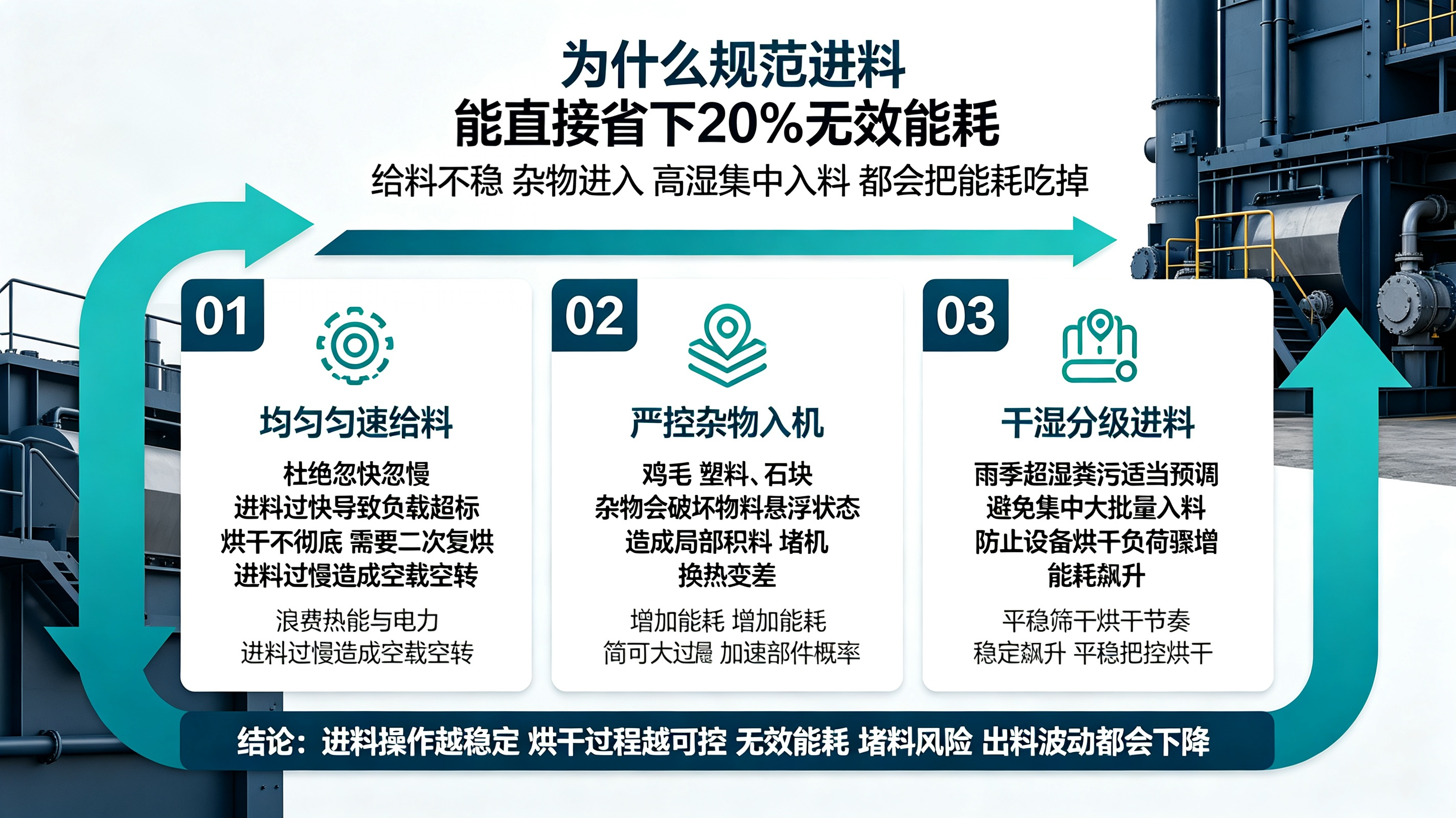
四、进料操作核心要点:规范操作,直接省下20%无效能耗
很多设备高能耗,根源不是设备问题,而是进料不规范。抓好两点操作,无需改造设备,即可快速降本:
1. 均匀匀速给料,杜绝忽快忽慢
进料过快,设备负载超标、烘干不彻底,需要二次复烘;进料过慢,设备空载空转,白白浪费热能与电力。依托设备智能进料系统,匀速稳定送料,让热风换热始终处于高效区间,最大化利用每一份热能。
2. 严控杂物入机,减少设备损耗堵料
鸡毛、塑料、石块、杂物进入设备,会破坏物料悬浮状态,造成局部积料、堵机、换热变差,不仅增加能耗,还会加速部件磨损。简单筛分过滤,即可大幅减少故障概率,保障设备长效高效运行。
3. 干湿分级进料,规避极端高湿料集中入机
雨季超湿粪污适当预调,避免集中大批量入料,防止设备烘干负荷骤增、能耗飙升,平稳把控烘干节奏,稳定出料含水率。
IV. Core Feed Operation Guidelines: Standardised Cuts 20% of Wasted Energy
High energy consumption in many machines originates not from the equipment itself, but irregular feeding. By mastering two operating points, you can reduce costs quickly without equipment retrofits:
Feed material evenly and at a steady rate; avoid fluctuating speeds Overfeeding overloads the machine and results in incomplete drying that requires secondary re-drying. Underfeeding leads to no-load idling, wasting heat and electricity. Rely on the intelligent feeding system to deliver material steadily, keeping hot air heat exchange within an efficient range and maximising heat utilisation.
Strictly block impurities from entering the machine to reduce wear and blockages Chicken feathers, plastics, stones and debris disrupt material suspension, triggering local buildup, blockages and poor heat exchange. This not only increases energy consumption but also accelerates component wear. Simple screening and filtration can drastically lower failure rates and maintain long-term efficient operation.
Grade feeding by moisture level, avoid bulk input of extremely wet material Pre-condition overly wet manure from rainy seasons to prevent sudden surges in drying load and energy consumption. Stabilise drying rhythm and maintain consistent moisture of output material.
五、日常运维关键点:少坏、少停、少换件,就是最大省钱
烘干设备三分用、七分养,频繁故障停机、频繁换件,是最容易被忽略的隐性成本。常态化做好基础维保,可有效延长设备寿命、稳定高热效率:
✅ 定期清理积料:及时清理腔体、风道、除尘系统残留积料,防止积料霉变、堵塞风道,保证热风循环通畅,维持稳定热效率;
✅ 易损件定期巡检:打散部件、密封件、风机配件按时检查更换,小问题及时处理,杜绝小故障拖成大停机;
✅ 温控参数常态化校准:避免温度过高造成燃料浪费、物料焦糊,或温度过低烘干不达标,精准控温实现节能降耗;
✅停机规范操作:杜绝带料急停、空载长时间运行,养成规范启停习惯,减少设备无效损耗。
稳定的运维习惯,可直接降低30%以上故障停机率,大幅减少维修成本与误工损失。
V. Key Daily O&M Principles: Less Breakdowns, Fewer Stops and Fewer Part Replacements Equal Maximum Savings
Drying equipment relies 30% on usage and 70% on maintenance. Frequent breakdowns and part replacements are easily overlooked hidden costs. Routine basic maintenance effectively extends service life and maintains high thermal efficiency: ✅ Regularly clear accumulated material: Remove residual buildup in chambers, air ducts and dust removal systems promptly to prevent mildew and blockages, securing smooth hot air circulation and stable thermal efficiency. ✅ Periodic inspection of wearing parts: Inspect and replace breaking components, seals and fan accessories on schedule. Fix minor issues in time to stop small faults escalating into long shutdowns. ✅ Regular calibration of temperature control parameters: Prevent fuel waste and material scorching caused by overheating, or substandard drying from insufficient temperature. Precise temperature control saves energy. ✅ Standard shutdown procedures: Avoid emergency stops with material inside or prolonged no-load running. Build good start-stop habits to reduce unnecessary equipment wear.
Consistent O&M habits can cut equipment failure shutdown rates by more than 30%, greatly lowering maintenance costs and production downtime losses.
六、大中小养殖场吨料处理成本拆解,真实工况参考
结合金万泓全国落地项目实测数据,以常规鸡粪烘干、达标含水率出料为标准,不同规模场区综合成本参考:
小型家庭鸡场(100万羽)
产能偏小、人工集约化低,综合处理成本偏高;优选生物质热源,做好日常管控,可稳定控制单吨成本,实现小批量稳定变现,满足场内自用+少量外销。
中型规模化鸡场(200万羽)
产能优势凸显,设备满负荷连续运行,热利用率最大化,人工、能耗均摊成本最低,是烘干盈利最优的规模区间,合规增收效果显著。
大型养殖产业园(200万羽以上)
可适配余热利用、大批量生物质集中供料,叠加自动化运维,吨料成本压至最低;可拓展代加工、大批量外销,规模盈利优势拉满。
注:实际成本受当地燃料价格、气温、物料含水率影响,以上为常态化工况参考。
VI. Cost Breakdown Per Tonne for Small, Medium and Large Farms, Reference from Real Operation Data
Based on field-tested data from Jinwanhong’s nationwide projects, with standard chicken manure drying and qualified output moisture, here is the reference of comprehensive costs for farms of different scales: Small family chicken farm (1 million birds) Lower production capacity and less intensive labour lead to relatively high comprehensive processing costs. Choosing biomass heat sources and tight daily control can stabilise per-tonne costs, supporting steady small-volume sales for on-site use plus limited external sales.
Medium large-scale chicken farm (2 million birds) Production advantages emerge. Continuous full-load equipment operation maximises thermal efficiency and brings the lowest averaged labour and energy costs. This scale represents the optimal profit range for drying, delivering remarkable compliant revenue growth.
Large breeding industrial park (over 2 million birds) Can utilise waste heat and bulk centralised biomass feeding, coupled with automated O&M, to minimise per-tonne costs. Value-added services such as contract drying and large-volume external sales can be developed to maximise scale profit advantages.
Note: Actual costs are affected by local fuel prices, ambient temperature and material moisture content. The above figures serve only as reference under normal operating conditions.
七、老客户长期降本实操经验分享
金万泓多位长期合作老场,通过系统化运维改造,实现烘干成本持续下降,总结三大实操干货:
1. 满负荷连续运行,减少启停损耗
设备频繁启停的能耗损耗远高于连续运行,规模化场区尽量集中时段连续作业,减少反复升温、降温的无效能耗,大幅提升热利用率。
2. 干湿分区堆放,提前预处理调衡
将干湿鸡粪分区堆放、适度掺配,平衡入料含水率,避免极端湿料拉高整体能耗,用最简单的方式稳定烘干效率、压缩成本。
3. 固定专人运维,形成标准化操作
专人负责设备操作、日常巡检、参数记录,熟练掌握设备最佳运行区间,杜绝新手乱调参数、无效操作带来的能耗浪费,长期稳定保持低成本运行状态。
4. 利用闪蒸余热回收结构,长效节能
金万泓卧式闪蒸自带密闭热风回收、余热循环利用结构,区别于老式设备热风直排的热量浪费,持续复用尾气余热,长期运行节能优势显著,日积月累省下大额能耗开支。
VII. Practical Long-term Cost Reduction Experience from Existing Customers
Many long-term partner farms of Jinwanhong have continuously cut drying costs through systematic O&M upgrades. Three practical takeaways are summarised:
Full-load continuous operation to reduce start-stop losses Energy waste caused by frequent startup and shutdown is far higher than continuous running. Large-scale farms should operate continuously in concentrated time windows to eliminate ineffective energy loss from repeated heating and cooling and greatly lift thermal efficiency.
Separate stacking for wet and dry manure with pre-blending Stack wet and dry chicken manure separately and blend appropriately to balance inlet moisture, preventing extremely wet material from pushing up overall energy consumption. This simple method stabilises drying efficiency and compresses costs.
Dedicated O&M staff to standardise operations Assign dedicated operators for machine handling, daily inspection and parameter logging. Operators master the optimal operating range and avoid energy waste from improper parameter adjustment by inexperienced staff, sustaining low-cost operation long-term.
Leverage flash waste heat recovery structure for long-term energy saving Jinwanhong horizontal flash dryers are built with enclosed hot air recovery and waste heat circulation systems. Unlike old-style machines that directly exhaust hot air and waste heat, it recycles tail gas heat continuously for outstanding long-term energy-saving benefits, cutting massive energy bills over time.
写在最后
鸡粪烘干的真正利润,从来不是靠设备产能堆出来的,而是靠精细化运维、低成本运行省出来的。
同样的设备、同样的行情,有人稳赚不赔,有人保本微利,差距全在热源选型、进料管控、日常维保的细节里。选对设备、用对方法、做好运维,才能让粪污处理从“耗钱负担”,变成养殖场稳定长效的盈利增长点。
想要根据你的场区规模、现有热源,一对一测算最优降本方案和吨料成本,欢迎咨询金万泓机械。
Genuine profit in chicken manure drying does not come from expanding equipment capacity, but from refined operation and maintenance and low-cost running.
With identical equipment and market conditions, some operators make steady profits while others barely break even. The gap lies in small details: heat source selection, feedstock control and daily maintenance. Only by choosing the right equipment, adopting proper methods and carrying out good maintenance can manure disposal transform from a costly burden into a stable and long-term profit growth point for farms.
If you want a custom calculation of optimal cost-reduction plans and per-tonne processing costs based on your farm scale and existing heat source, feel free to contact Jinwanhong Machinery.