【引言】
随着生态环境监管持续收紧,畜禽粪污无害化、资源化已经不再是可选项,而是规模化养殖场的硬性经营要求。2026 年全国各省市持续推进畜禽粪污资源化提升项目,设备改造补贴、专项奖补、税费减免多重红利同步落地。 很多养殖企业不清楚申报条件、材料要求,白白错失政策扶持。本文为大家完整梳理新政要点、补贴标准、申报条件、避坑提示,帮助养殖场吃透政策,降低环保改造投入成本。
As ecological‑environment supervision continues to tighten, the harmless treatment and resource utilisation of livestock and poultry manure are no longer optional, but mandatory operational requirements for large‑scale breeding farms. In 2026, provinces and municipalities across China keep advancing programmes for improved resource utilisation of livestock‑poultry manure. Multiple policy benefits are being rolled out simultaneously, including equipment retrofitting subsidies, special incentive grants and tax relief. Many breeding enterprises miss out on policy support simply because they are unclear about application criteria and document requirements. This article systematically sorts out key points of new policies, subsidy standards, application prerequisites and risk‑avoidance tips, helping farms fully leverage policies and cut capital expenditure for environmental‑protection retrofits.
一、2026 全国及地方畜禽养殖污染治理最新政策更新,明确粪污无害化处理硬性标准
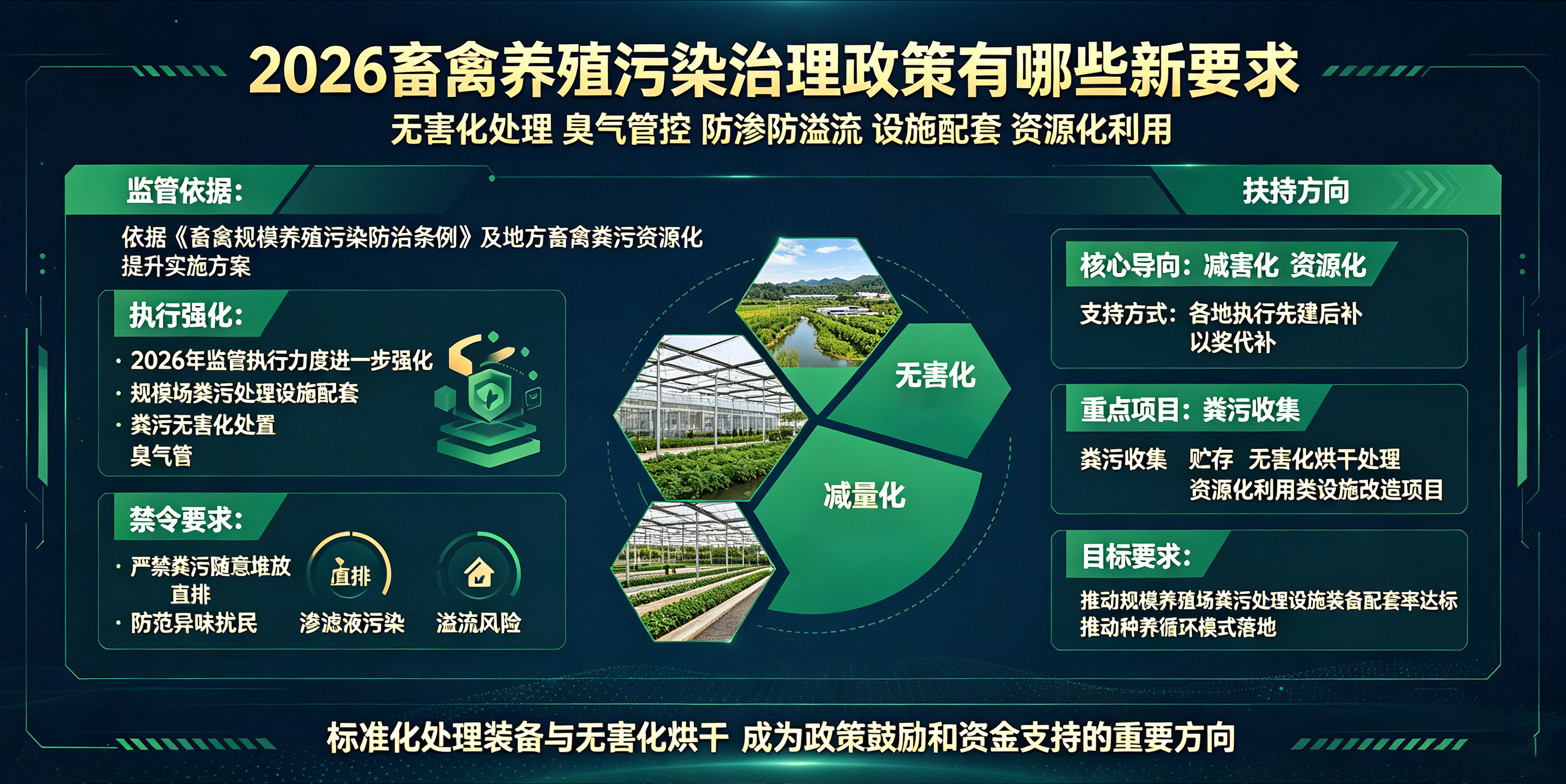
依据《畜禽规模养殖污染防治条例》及地方畜禽粪污资源化提升实施方案,2026 年监管执行力度进一步强化,规模场粪污处理设施配套、粪污无害化处置、臭气管控、防渗防溢流全部纳入常态化巡查范围。 政策核心导向:减量化、无害化、资源化,严禁粪污随意堆放、直排,鼓励配套标准化处理装备,推动种养循环模式落地。各地执行“先建后补、以奖代补”,重点扶持粪污收集、贮存、无害化烘干处理、资源化利用类设施改造项目,推动规模养殖场粪污处理设施装备配套率达标。
提示:各省份补助比例、申报时间以当地农业农村局、生态环境局当年发布实施方案为准。
I. Latest National and Local Policy Updates for Livestock‑poultry Pollution Control in 2026: Mandatory Standards for Harmless Manure Treatment
In accordance with the Regulations on Prevention and Control of Pollution from Large‑scale Livestock and Poultry Breeding and local implementation plans for enhancing manure resource utilisation, regulatory enforcement has been further strengthened in 2026. Supporting manure‑treatment facilities, harmless manure disposal, odour control, anti‑seepage and overflow prevention at large‑scale farms are all included in routine inspections.
Core policy orientation: reduction, harmless treatment and resource utilisation. Random stockpiling and direct discharge of manure are strictly prohibited. Farms are encouraged to install standardised treatment equipment and deploy planting‑breeding circular‑economy models. Most regions adopt the “subsidy after construction, incentives in lieu of subsidies” mechanism. Priority support is given to retrofitting projects for manure collection, storage, harmless drying treatment and resource utilisation, aiming to bring the matching rate of manure‑treatment facilities and equipment at large‑scale farms up to compliance standards.
Note: Subsidy ratios and application timelines for each province shall be subject to the annual implementation plans released by local bureaus of agriculture‑rural affairs and ecological‑environment.
二、养殖设备改造专项补贴:分级补助标准、最高补贴比例及单项目封顶金额详解
粪污处理设备升级改造属于政策重点支持范畴,普遍采用先建设、后补助模式,项目验收完成后拨付补贴资金。
补助比例:设备改造项目补助最高可达项目总投资50%;
单项目上限:规模化养殖场粪污改造项目单项目最高补助可达300 万元;
分级执行:部分区县对中小规模养殖场、粪污集中处理中心设置分级封顶额度,按照投资规模、处理产能、资源化成效核算补助金额。
补贴支持内容:标准化烘干设备、上料输送、除尘除臭、仓储等粪污无害化处理成套设施;老旧环保设备技改升级同样纳入申报范围。
注意:同一建设内容不能重复申领多项财政补贴;项目需要先完成建设投产、通过验收才可申领资金,不支持未建先补。
II. Special Subsidies for Breeding‑equipment Retrofit: Tiered Subsidy Standards, Maximum Subsidy Ratios and Project‑specific Funding Caps
Upgrading and retrofitting manure‑treatment equipment falls under key policy support. The “build first, subsidise later” model is widely applied; subsidy funds are disbursed upon successful project acceptance.
Subsidy ratio: Retrofit projects may receive subsidies covering up to 50 % of total project investment.
Per‑project cap: The maximum subsidy for a single manure‑retrofit project at a large‑scale farm can reach RMB 3 000 000.
Tiered implementation: Some districts and counties set tiered funding ceilings for small‑and‑medium‑sized farms and centralised manure‑treatment hubs. Subsidy amounts are calculated based on investment scale, processing capacity and resource‑utilisation outcomes.
Eligible subsidised items: complete sets of harmless manure‑treatment facilities including standardised drying equipment, feeding‑conveying systems, dust‑odour removal units and storage installations. Technical upgrades for ageing environmental‑protection equipment are also eligible for application.
Caution: Identical construction contents cannot receive multiple fiscal subsidies. Projects must be completed, commissioned and pass acceptance before fund disbursement; no pre‑construction subsidies are available.
三、资源化利用税费红利:固废综合利用、有机肥生产相关增值税、企业所得税减免政策
完成粪污资源化改造之后,企业还可以享受税收层面的政策红利,进一步压缩运营成本。
1.增值税优惠 利用畜禽粪污生产销售有机肥产品,按政策可免征增值税;符合条件的固废综合利用项目,可享受增值税即征即退政策,原料占比需要达到政策规定标准,产品符合行业质量标准才可享受优惠。
2.企业所得税优惠 从事畜禽粪污无害化处置、固废综合利用的环保项目,可享受三免三减半政策:项目取得第一笔经营收入起,前三年免征企业所得税,第四-第六年减半征收;符合条件可执行资源综合利用减计收入等税收优惠。
建议企业提前和属地税务部门对接,核对企业条件,准备产品检测报告、资源综合利用佐证材料。
III. Tax Benefits for Resource Utilisation: VAT and Corporate‑income‑tax Relief for Comprehensive Solid‑waste Utilisation and Organic‑fertiliser Production
Following manure‑resource‑utilisation retrofits, enterprises may access tax‑policy dividends to further lower operating costs.
Value‑added‑tax incentives: VAT exemption applies to organic‑fertiliser products manufactured and sold from livestock‑poultry manure, subject to relevant policies. Qualified comprehensive solid‑waste‑utilisation projects are eligible for VAT refund‑upon‑payment incentives, provided raw‑material proportion meets regulatory thresholds and finished goods comply with industrial quality standards.
Corporate‑income‑tax incentives: Environmental‑protection projects engaging in harmless disposal of livestock‑poultry manure and comprehensive solid‑waste utilisation qualify for the “three‑year exemption, three‑year half‑reduction” scheme. Starting from the first operating revenue generated by the project, corporate income tax is exempted for the initial three years and halved for the fourth through sixth years. Additional tax incentives such as income reduction for qualified comprehensive resource‑utilisation activities may also apply.
Enterprises are advised to consult local tax authorities in advance to verify eligibility and prepare product test reports and supporting documentation for comprehensive resource utilisation.
四、种养循环示范基地、粪污集中处理中心专项奖励资金申报要求
针对区域性粪污处置项目,各地设立种养循环示范基地、粪污集中处理中心专项奖补资金,面向两类主体:
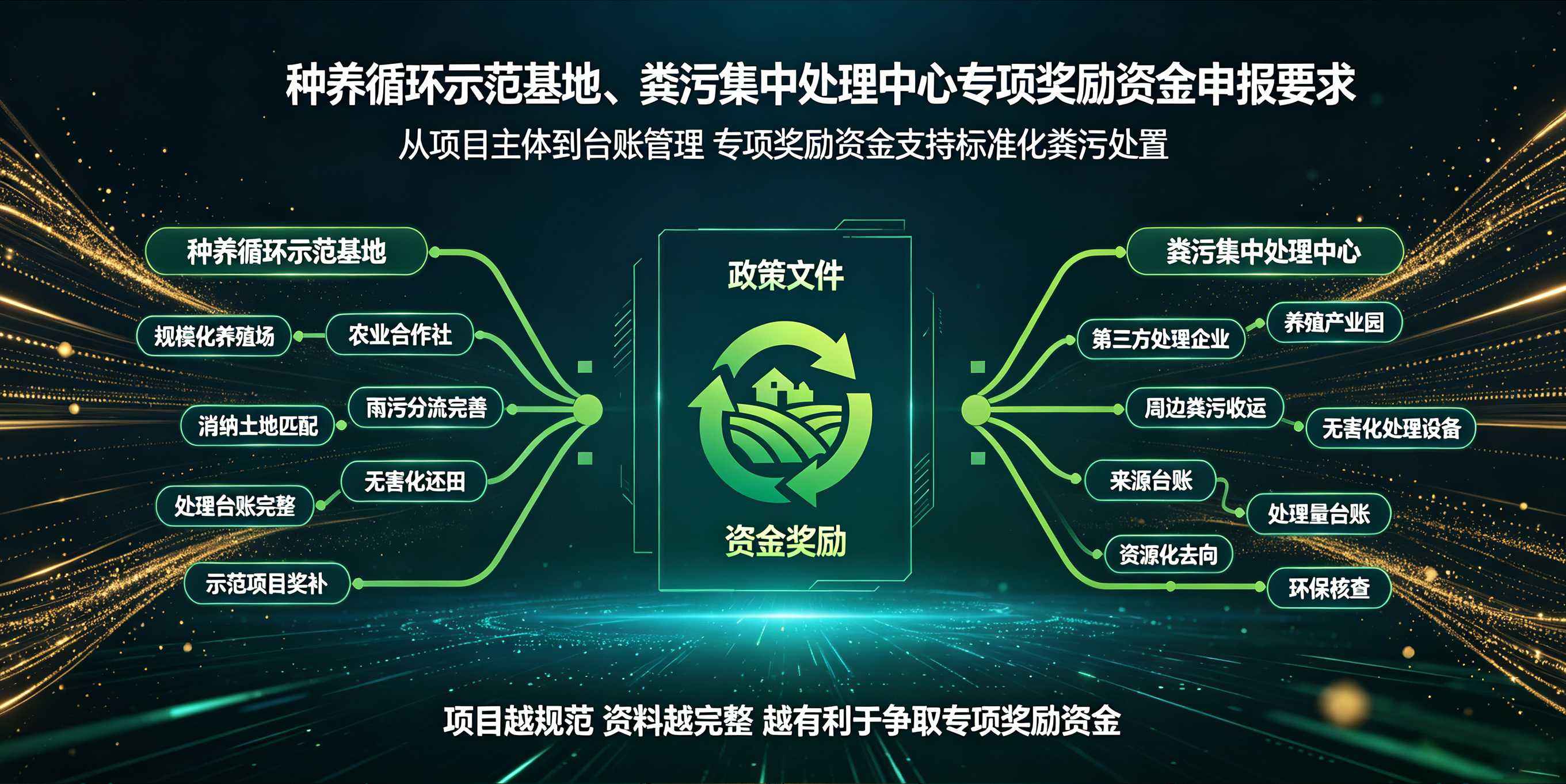
1.种养循环示范基地 申报主体:规模化养殖场、农业合作社;基础条件:具备匹配的粪污消纳土地,雨污分流完善,粪污经过无害化处理后还田利用,建立完整粪污处理台账,设施正常稳定运行。支持方向:烘干处理设备、粪肥还田管网、储存设施建设改造,获评示范项目可获得专项奖补。
2.粪污集中处理中心 面向第三方处理企业、养殖产业园,承接周边散户、中小型养殖场粪污集中处置;要求具备稳定收运处置能力,全套无害化处理设备,完整台账记录粪污来源、处理量、资源化去向,通过环保核查后可申领专项奖励资金。
IV. Application Requirements for Special Incentive Grants for Planting‑breeding Circular Demonstration Bases and Centralised Manure‑treatment Centres
For regional manure‑disposal projects, local governments set up special incentive funds targeting planting‑breeding circular demonstration bases and centralised manure‑treatment centres for two categories of applicants:
Planting‑breeding circular demonstration bases Applicants: large‑scale breeding farms, agricultural cooperatives. Basic prerequisites: matching land capacity for manure absorption, complete rain‑sewage diversion systems, land‑application of harmlessly‑treated manure, full manure‑treatment ledgers and stable facility operation. Supported activities: construction and retrofitting of drying‑treatment equipment, manure‑application pipe networks and storage facilities. Designated demonstration projects qualify for special incentive grants.
Centralised manure‑treatment centres Open to third‑party treatment enterprises and breeding industrial parks that deliver centralised manure disposal for surrounding smallholder and medium‑small farms. Requirements: stable collection‑transport‑disposal capacity, full sets of harmless‑treatment equipment, complete ledgers recording manure sources, processing volumes and resource‑utilisation destinations. Special incentive funds become available after passing environmental‑protection verification.
五、新规硬性要求:规模化养殖场必须配套标准化烘干处理设备,逾期整改将面临处罚
现行法规明确要求:规模化养殖场必须建设配套污染防治设施,实现粪污无害化处置,设施必须正常投运,不能闲置停用中国政府网。
·未配套合规处理设备、粪污乱堆乱放、异味扰民,将被责令限期整改;
·逾期未完成整改,可依法处以罚款,影响养殖场环评备案、动物防疫条件合格证年审;
·仅依靠露天堆放、简单晾晒无法满足现行环保核查要求,必须配备标准化无害化处理装备。
提醒:夏季高温雨季是环保巡查、群众投诉高发期,建议提前完成设备配套改造,避免停产整改风险。
V. Mandatory New‑regulation Requirement: Large‑scale Farms Must Deploy Standardised Drying‑treatment Equipment; Penalties for Delayed Rectification
Current laws and regulations explicitly require large‑scale breeding farms to build supporting pollution‑prevention facilities for harmless manure disposal. Such facilities must remain in normal operation and shall not lie idle (Source: Government of the People’s Republic of China).
Farms lacking compliant treatment equipment, practising disordered manure stockpiling or causing odour nuisance shall be ordered to complete rectification within a specified time limit.
Failure to finish rectification on schedule may trigger statutory fines and adversely affect EIA filing and annual inspection of animal‑epidemic‑prevention qualification certificates.
Open‑air stockpiling and simple sun‑drying alone cannot satisfy current environmental‑protection audit standards; standardised harmless‑treatment equipment is compulsory.
Reminder: Hot summer and rainy seasons see frequent environmental‑protection inspections and public complaints. Early equipment retrofits are recommended to avoid production‑halt‑for‑rectification risks.
落地参考案例
山东某100万羽规模化蛋鸡场,2025-2026 年实施粪污烘干技改,采购卧式闪蒸烘干设备,完成场内粪污无害化处理改造。项目通过属地主管部门审核,顺利完成验收,拿到设备改造专项补贴;同时干鸡粪作为有机肥原料对外销售,兼顾环保合规与资源化收益。
A large‑scale 1 000 000‑hen layer farm in Shandong implemented manure‑drying technical retrofits during 2025‑2026 by installing horizontal flash‑drying equipment to realise on‑site harmless manure processing. The project passed review and official acceptance by local competent authorities and obtained special equipment‑retrofit subsidies. Meanwhile, dried chicken manure is sold externally as organic‑fertiliser feedstock, achieving both environmental compliance and resource‑derived revenue.
写在最后
环保改造不只是花钱整改,用好政策红利可以显著降低项目投入。2026 年各地粪污资源化项目申报窗口集中开放,符合条件的养殖场建议尽早规划,优先完成设备配套改造,既守住环保底线,也争取政策扶持,实现合规与增收双向兼顾。
Environmental‑protection retrofits are not merely a financial burden. Well‑utilised policy dividends can drastically cut project investment. Application windows for manure‑resource‑utilisation projects are opening widely across regions in 2026. Qualified farms are encouraged to plan ahead and prioritise equipment retrofits. This safeguards environmental‑compliance benchmarks while capturing policy support, reconciling regulatory adherence with profit growth.