【引言】
每到秋收季,玉米秆、小麦秆、水稻秆等农作物秸秆集中产出,大量秸秆堆积田间,已然成为很多产区的棘手难题。露天焚烧明令禁止,会面临罚款甚至法律追责;随意堆放又会带来一系列环境问题。秸秆不是农业废弃物,而是极具价值的农林资源,关键在于找到规模化、稳定可行的处理出路。
Every autumn harvest season, large volumes of crop straw such as corn‑stalks, wheat straw and rice straw are generated in concentrated batches. Massive straw piles in farm‑fields have become a tough headache for many producing regions. Open‑air burning is strictly prohibited and may result in fines or even legal liability; random stockpiling, in turn, gives rise to a host of environmental problems. Straw is not agricultural waste but highly valuable agro‑forestry resource. The key lies in identifying large‑scale, stable and feasible disposal outlets.
一、农田秸秆处理痛点:产量大处置难,焚烧受重罚,堆放隐患重重
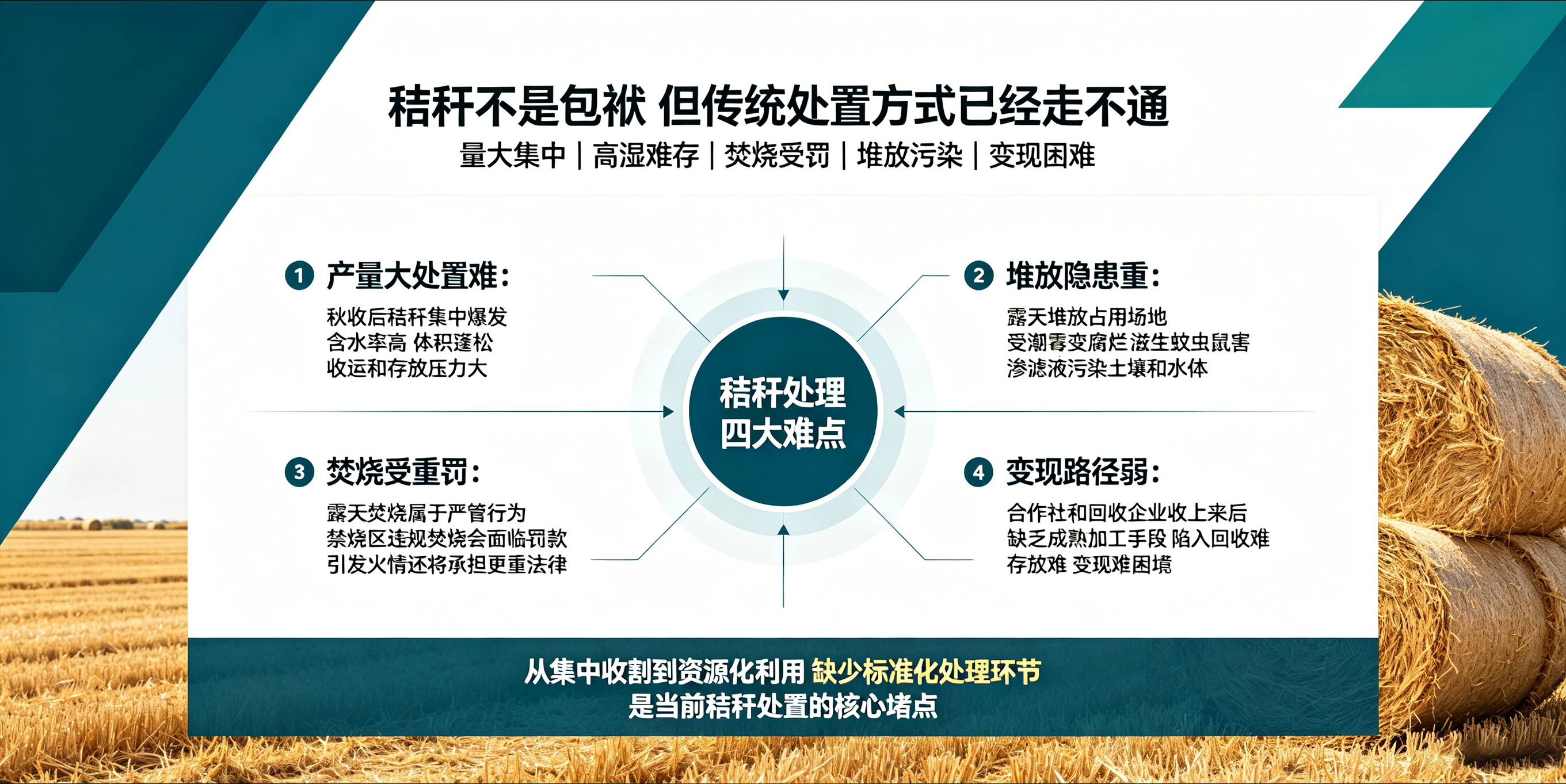
秋收之后秸秆产量集中爆发,刚收割的原生秸秆含水率高,体积蓬松庞大,露天堆放占用大量场地。受潮之后极易霉变腐烂,滋生蚊虫鼠害,渗滤液还会污染田间土壤与周边水体,带来环保隐患。
露天焚烧属于严管行为,禁烧区内违规焚烧秸秆会面临罚款,一旦引发火情还将承担更重法律责任,这条路已经走不通。很多合作社、回收企业手上秸秆收上来,却没有成熟加工手段,大量秸秆只能闲置堆放,陷入回收难、存放难、变现难的困境。
I. Pain Points of Farm‑field Straw Treatment: High Output Difficult to Dispose, Heavy Penalties for Burning, Severe Hidden Risks from Stockpiling
Straw output surges sharply after autumn harvest. Freshly‑harvested raw straw features high moisture content and bulky, fluffy texture. Open‑air stockpiling occupies extensive land areas. When dampened, it readily turns mouldy and rotten, breeding mosquitoes, rodents and pests. Leachate further contaminates farm‑land soil and surrounding water bodies, posing environmental hazards.
Open‑air burning falls under strict regulation. Unauthorised straw burning within no‑burn zones incurs fines; should fires be triggered, perpetrators face more severe legal consequences. This disposal route is no longer viable. Many cooperatives and recycling enterprises collect straw yet lack mature processing capacity. Large quantities of straw can only sit idle in stockpiles, creating a predicament of difficult collection, problematic storage and poor monetisation.
二、传统处置方式弊端重重,难以实现规模化商用
过去秸秆处理大多依靠自然晾晒,现实中却有诸多局限:
完全靠天气作业,遇到阴雨天秸秆快速发霉变质,损耗率极高;
需要大面积晾晒场地,人工搬运摊晒耗费大量人力;
晾晒后含水率参差不齐,打捆之后达不到商品原料标准;
受季节、天气制约,不能连续生产,只适合小范围农户自用,无法支撑工厂化、规模化加工,资源利用率很低。
简单堆放、粉碎直接还田也存在短板,还田不充分会影响下一季播种,很难形成稳定的商业化收益。想要把秸秆变成可外销的商品原料,烘干是必不可少的关键工序。
II. Drawbacks of Conventional Disposal Methods, Hindering Large‑scale Commercial Application
In the past, straw treatment largely relied on natural sun‑drying, which suffers from substantial practical limitations:
Operations are entirely weather‑dependent. Straw quickly goes mouldy and deteriorates during rainy weather, leading to extremely high material loss rates.
Vast drying yards are required, and manual handling and spreading consume considerable labour.
Moisture levels remain inconsistent after sun‑drying, and baled straw fails to meet commercial raw‑material standards.
Restricted by seasons and weather, continuous production cannot be realised. It is only fit for small‑scale on‑farm self‑use and cannot support factory‑style large‑scale processing, resulting in low resource‑utilisation efficiency.
Simple stockpiling and direct in‑field chopping return also have shortcomings. Inadequate straw incorporation impedes sowing for the next crop cycle, and stable commercial returns are hard to achieve. Drying constitutes an indispensable key procedure if straw is to be converted into marketable raw materials for external sales.
三、金万泓单筒循环换热烘干工艺,适配秸秆蓬松轻质物料特性
秸秆质地蓬松、质轻易飘,普通烘干设备很容易出现跑料、烘不透、物料焦糊的情况。金万泓单筒烘干机,采用单筒循环换热工艺,专门针对秸秆这类轻质农林物料优化设计。
高温热风在单筒体循环穿行,物料跟随筒体回转不断抛洒翻动,热风穿透秸秆纤维内部,换热,升温均匀、烘干速度快。科学控温模式,避免局部高温,做到不焦料、不碳化,最大限度保留秸秆原有营养成分;整套设备配套除尘系统,生产过程扬尘可控,满足厂区环保生产要求。
III. Jinwanhong Single‑drum Circulating Heat‑exchange Drying Process, Tailored for Fluffy Light‑weight Straw
Straw is fluffy, light‑weight and prone to drifting. Ordinary drying equipment frequently suffers material carry‑over, incomplete drying and scorching. Jinwanhong single‑drum dryer adopts a single‑drum circulating heat‑exchange process optimised specifically for light‑weight agro‑forestry materials such as straw.
High‑temperature hot air circulates inside the single drum. Material is continuously lifted and tumbled as the drum rotates. Hot air penetrates straw fibres to deliver even heating and fast drying. A scientifically‑calibrated temperature‑control mode avoids local overheating, preventing scorching and carbonisation while preserving maximum inherent nutritional value of straw. Equipped with a supporting dust‑removal system, the unit keeps dust emissions under control and satisfies on‑site environmental‑protection production requirements.
四、专属扬料打散结构,攻克秸秆缠绕、结团、飘料难题
秸秆质地长软,进料之后极易缠绕抱团,普通滚筒容易出现堵料、飘料跑出筒体,成品干湿差距大。
金万泓针对秸秆物料优化内部结构:配置专属扬料板+ 打散装置,进料之后对缠绕结团秸秆持续打散抛撒,把成团物料充分散开。物料在筒体内充分分散受热,烘干无死角,成品干湿均匀,蓬松度保持良好。设备可灵活调节转速、热风温度,成品含水率稳定可控,能够按照后续加工需求调节出料水分,满足饲料、燃料、有机肥不同品类原料标准。
IV. Specialised Lifting and Disintegration Structure to Resolve Straw Tangling, Agglomeration and Drifting
Long, soft straw tends to tangle and clump upon feeding. Conventional rotary drums often experience clogging, material drifting out of the drum and uneven moisture in finished products.
Jinwanhong optimises internal geometry for straw: custom lifting flights together with disintegration devices continuously break apart and disperse tangled, clumped incoming straw. Material is fully dispersed for uniform heating inside the drum with zero drying dead zones. Finished straw delivers consistent moisture and retains satisfactory bulkiness. Rotational speed and hot‑air temperature can be flexibly adjusted to deliver stably‑controlled output moisture, complying with raw‑material specifications for feed, fuel and organic‑fertilizer applications.
五、烘干后秸秆多元资源化用途,一物多用实现多渠道变现
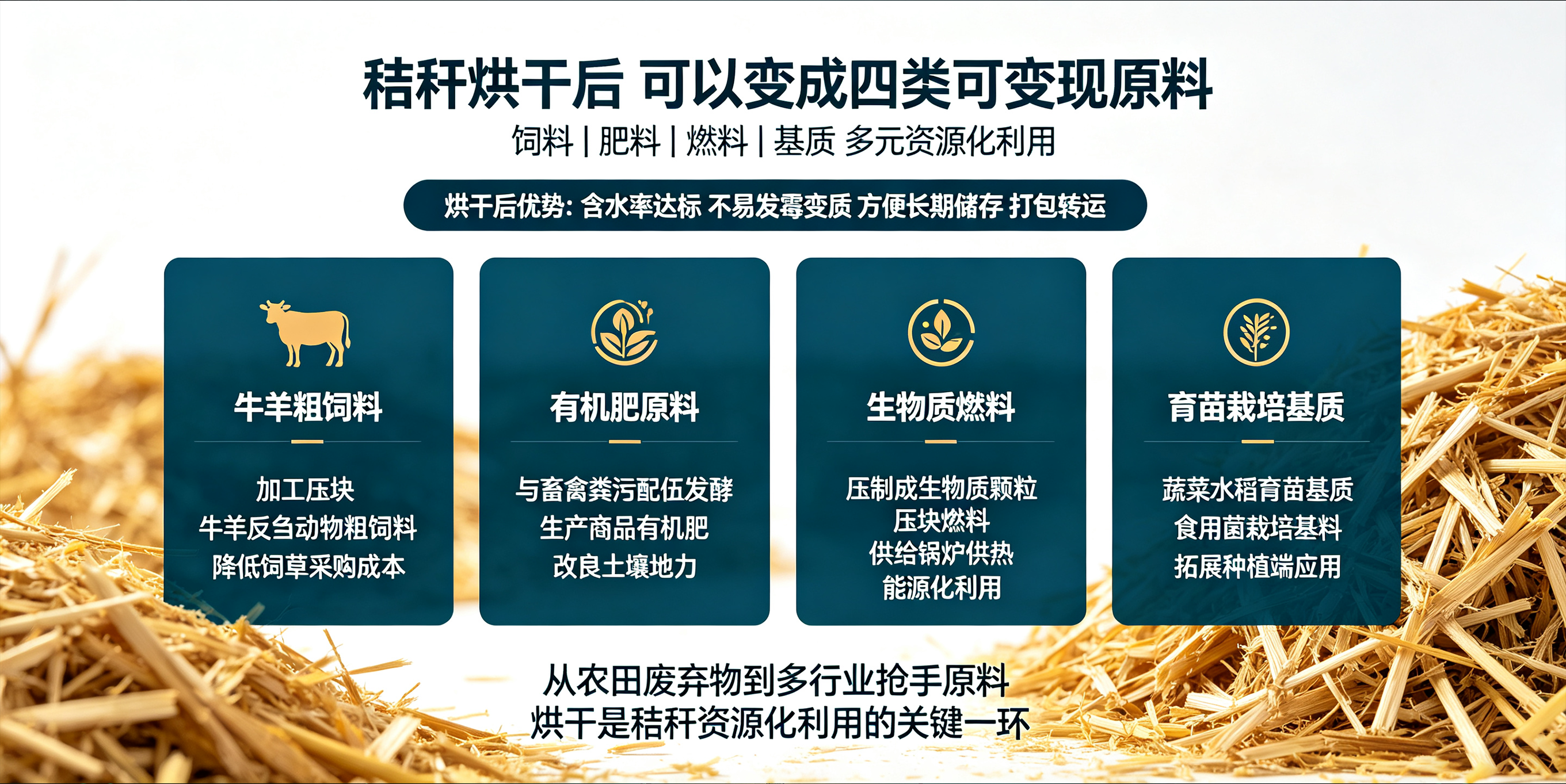
经过单筒烘干处理后的秸秆,含水率达标、不易发霉变质,方便长期储存、打包转运,打开多条变现路径:
1.牛羊粗饲料:烘干秸秆可进一步加工压块,作为牛羊等反刍动物粗饲料,降低养殖场饲草采购成本;
2.有机肥原料:和畜禽粪污配伍发酵,生产商品有机肥,改良土壤地力;
3.生物质燃料:压制成生物质颗粒、压块燃料,可供给锅炉供热,实现能源化利用;
4.育苗/ 栽培基质:加工为蔬菜、水稻育苗基质,也可以作为食用菌栽培基料,拓展种植端应用。
原本头疼的农田废弃物,经过烘干加工之后,变成多行业抢手原料,真正实现变废为宝。
V. Diversified Resource‑utilisation of Dried Straw: Multi‑purpose Material with Multiple Monetisation Channels
Single‑drum‑dried straw meets required moisture standards, resists mould and deterioration, and facilitates long‑term storage, baling and transportation, unlocking multiple revenue streams:
Roughage for cattle and sheep: Dried straw can be further processed into bales as roughage for ruminants such as cattle and sheep, cutting forage‑procurement costs for breeding farms.
Raw material for organic fertiliser: Mixed with livestock and poultry manure for fermentation to produce commercial organic fertiliser and improve soil fertility.
Biomass fuel: Compressed into biomass pellets or briquettes for boiler heating and energy‑oriented utilisation.
Nursery / cultivation substrate: Processed into seedling substrate for vegetables and rice, or used as growing medium for edible fungi, expanding application within planting industries.
What was once troublesome farm‑field waste is transformed into sought‑after raw material for multiple industries, genuinely turning waste into value.
六、适配多类项目场景,支持规模化连续作业
设备适配多种经营主体:农田集中产区、秸秆回收加工厂、农牧产业园、秸秆综合利用示范项目,可搭建成套秸秆烘干生产线。
设备支持24 小时连续化大批量作业,不受阴雨天气制约,秸秆回收高峰期也可以高效消化收储物料。既可以新建完整成套产线,也可以对接客户原有粉碎、上料、制粒、打包设备,兼容现有配套,减少重复投入。
VI. Compatible with Multiple Project Scenarios and Supporting Large‑scale Continuous Operations
The equipment suits diverse operators: concentrated farm‑producing zones, straw‑recycling processing plants, agro‑pastoral industrial parks and demonstration projects for comprehensive straw utilisation. Complete straw‑drying production lines can be assembled.
It supports high‑volume 24‑hour continuous operations independent of rainy weather, enabling efficient processing of collected straw even at peak recycling seasons. Either brand‑new full‑set production lines can be constructed, or the dryer can interface with customers’ existing crushing, feeding, pelleting and baling equipment to reuse available infrastructure and reduce redundant investment.
七、节能低耗运维简单,契合政策导向,可对接专项补贴
单筒结构自带筒体保温,余热充分回收利用,相比传统单筒烘干设备热效率更高,整机节能低耗,日常运维成本可控。
项目契合国家秸秆“五化” 综合利用、无废乡村、绿色农业的政策导向,各地针对秸秆收储加工、资源化利用有对应的专项扶持,符合条件项目可对接申报相关奖补资金,进一步压低项目投入成本。
提示:补贴具体条件、申报材料以当地农业农村主管部门当年政策为准。
VII. Energy‑saving, Low‑consumption and Easy‑maintenance, Aligned with Policy Guidelines and Eligible for Special Subsidies
The single‑drum design comes with built‑in thermal insulation and makes full use of waste‑heat recovery. It achieves higher thermal efficiency than traditional single‑drum dryers, delivering low overall energy consumption and manageable daily operation‑and‑maintenance costs.
Such projects align with national policies on the “five‑oriented” comprehensive utilisation of crop straw, zero‑waste villages and green agriculture. Local authorities offer special support for straw collection, storage, processing and resource‑oriented utilisation. Qualified projects may apply for corresponding incentive grants to further lower capital investment.
Note: Specific subsidy eligibility criteria and application documents are subject to annual policies issued by local competent departments of agriculture and rural affairs.
写在最后
秸秆禁烧不是简单“一禁了之”,只有打通资源化利用渠道,才能从根源上解决秸秆堆积处置难题。 金万泓单筒烘干机,专门适配秸秆等轻质农林固废烘干,帮助回收企业、合作社、农牧产业园把秸秆从“负担” 转化成可销售的商品原料,兼顾环保效益与经营收益。
Straw‑burning bans should not amount to simple outright prohibition. Only by opening‑up resource‑utilisation channels can the root‑causes of straw‑accumulation and‑disposal challenges be addressed. Jinwanhong single‑drum dryers are purpose‑built for drying light‑weight agro‑forestry solid waste such as straw. They help recycling enterprises, cooperatives and agro‑pastoral industrial parks turn straw from a “burden” into saleable commercial raw‑material, balancing environmental benefits and operational profitability.