【引言】
2026畜禽粪污资源化利用政策持续加码,多地出台设备改造专项补助、税费减免政策,不少规模化养殖场都有机会申领改造补贴。
但很多养殖朋友只听说有补贴,却不清楚申报门槛、需要准备哪些资料、验收要达到什么标准。设备买回来了,因为资料不全、工艺不达标、流程出错,最后补贴拿不到,白白错失政策红利。
补贴不是简单买设备就自动到手,它是一套完整的立项报备建设验收拨款闭环流程。今天我们结合多地项目实操经验,把粪污烘干改造项目申报全流程拆解清楚,帮大家少走弯路,提高申报通过率。
In 2026, policies for the resource‑based utilisation of livestock and poultry manure continue to be strengthened. Special subsidies for equipment retrofitting and tax relief policies have been rolled out across many regions, offering large‑scale breeding farms opportunities to apply for renovation subsidies.
Nevertheless, many breeders are only aware of the availability of subsidies yet remain unclear about application thresholds, required documentation and acceptance criteria. Some purchase equipment only to miss out on subsidies due to incomplete paperwork, non‑compliant processes or procedural errors, foregoing policy benefits in vain.
Subsidies are not granted automatically upon equipment purchase; they follow a closed‑loop workflow covering project initiation, filing, construction, acceptance and fund disbursement. Drawing on practical project experience from multiple regions, this article breaks down the full application workflow for manure‑drying renovation projects to help applicants avoid pitfalls and boost approval rates.
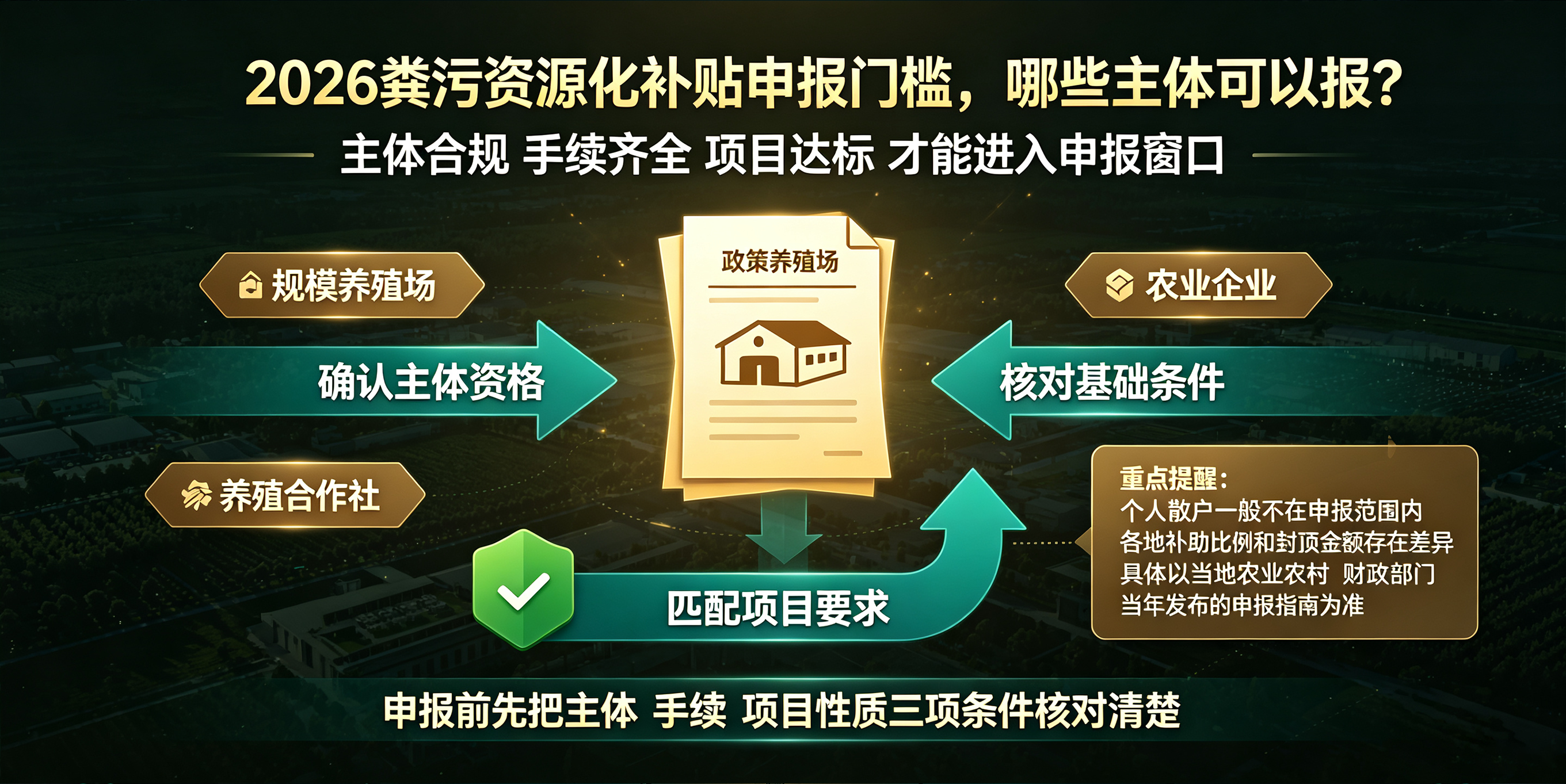
一、2026粪污资源化补贴申报门槛,哪些主体可以报?
从全国各省市最新项目通知来看,补贴主要面向合规经营的养殖经营主体,个人散户一般不在申报范围内。
✅ 可申报主体:规模养殖场、养殖合作社、家庭农场、粪污集中处理中心、农业企业等;
✅ 基础硬性条件:不在禁养区内、手续齐全,具备营业执照、动物防疫条件合格证,环评/环评备案完成,养殖档案完整,无失信、无环保处罚记录;
✅ 项目要求:大多执行先建后补原则,项目为新改扩建,往年已经拿到同类财政补助的项目,一般不能重复申报;
⚠️ 各地补助比例、单项目封顶金额存在差异,部分地区最高可给到总投资50%补助,具体以当地农业农村、财政部门当年发布的申报指南为准。
I. 2026 Manure‑resource‑utilisation Subsidy Application Eligibility: Who May Apply?
According to the latest project announcements from provinces and municipalities nationwide, subsidies are mainly open to law‑abiding breeding entities. Individual small‑scale household farmers are generally excluded.
✅ Eligible applicants: Large‑scale breeding farms, breeding cooperatives, family farms, centralised manure‑treatment centres and agricultural enterprises. ✅ Mandatory basic prerequisites: Located outside livestock‑prohibited zones with complete formalities, including business licence, Animal Epidemic Prevention Condition Certificate, completed EIA / EIA filing, sound breeding records and no records of bad faith or environmental‑protection penalties. ✅ Project requirements: The “build‑first‑subsidy‑later” principle applies in most cases. Projects shall be new‑build, renovation or expansion initiatives. Projects that have previously received similar fiscal subsidies are generally ineligible for repeated applications.
⚠️ Subsidy ratios and maximum single‑project caps vary by locality. Some regions offer subsidies up to 50 % of total investment. Applicants shall refer to the official annual application guidelines issued by local agricultural‑rural affairs and finance authorities.
二、烘干设备改造项目,申报与验收核心硬性标准
采购烘干设备不等于就可以拿补贴,评审和现场验收会重点核查工艺、设备性能、资源化效果。
处理工艺要符合畜禽粪污无害化、资源化相关技术规范,实现粪污减量化、无害化处理,不能只是简单堆放晾晒;
设备具备完整资质、检测报告,可实现连续稳定运行,不能是简易拼凑非标设备;
配套基础设施到位:上料、密闭除尘、废气处理、成品储存等配套同步落实,杜绝异味外溢、粉尘扰民;
产出干粪要可资源化利用,具备稳定的输出去向,自用还田或者外销有机肥厂均可,需要留存对应台账;
项目建设内容、投资预算要和申报方案保持一致,重大变更需要提前向主管部门履行变更报备手续。
II. Core Mandatory Criteria for Application and Acceptance of Drying‑equipment Renovation Projects
Equipment procurement alone does not guarantee subsidy approval. Review and on‑site acceptance place rigorous checks on process specifications, equipment performance and resource‑utilisation outcomes.
Treatment processes must comply with technical specifications for the harmless treatment and resource utilisation of livestock and poultry manure, achieving manure reduction and harmless disposal; simple stockpiling and sun‑drying are not acceptable.
Equipment shall possess complete qualifications and test reports and support continuous stable operation. Simple assembled non‑standard equipment is disqualified.
Supporting infrastructure must be in place: feeding systems, enclosed dust‑removal facilities, waste‑gas treatment and finished‑product storage shall be implemented concurrently to prevent odour leakage and dust nuisances for residents.
Output dried manure shall be suitable for resource‑oriented utilisation with confirmed end‑use channels, whether for on‑site farmland return or sales to organic‑fertilizer plants. Relevant ledgers must be retained.
Project scope and investment budgets shall align with submitted application proposals. Major modifications require prior change filing with competent authorities.
三、为什么很多养殖场拿不到补贴?四大常见失败原因
不少项目前期满怀期待,最后审核不予通过,大多集中在这几类问题:
❌ 设备本身不合规:采购小厂非标简易设备,缺少检测报告、出厂资质,工艺达不到无害化处理标准,现场验收直接否决;
❌ 申报资料残缺不全:缺少环评备案、设备发票、合同、实施方案、场区平面图、设备实景佐证材料,材料盖章不全、前后数据对不上;
❌ 流程顺序颠倒:没有完成项目立项报备就直接全部完工,部分地区“原建不补”,完工之后再申报失去资格;
❌ 重采购、轻配套:只买主机,除尘、密闭收集、成品仓储等配套缺失,现场核查发现环保隐患,不予通过验收。
提醒各位养殖户:补贴申报要做在前面,不要等到设备全部做完再想着补材料,前期规划就要把申报要求纳入考量。
III. Why Many Farms Fail to Secure Subsidies: Four Common Causes of Rejection
Numerous promising projects end up rejected during review, mostly for the following reasons: ❌ Non‑compliant equipment: Procurement of non‑standard makeshift units from small manufacturers lacking test reports and factory qualifications. Processes fail harmless‑treatment standards, leading to outright rejection during on‑site acceptance. ❌ Incomplete application documents: Missing EIA filings, equipment invoices, contracts, implementation plans, site layout drawings and photographic evidence; insufficient official seals and inconsistent data across submissions. ❌ Procedural mis‑order: Full project completion prior to project initiation and filing. Some regions enforce the “no‑subsidy‑for‑pre‑completed‑works” rule, disqualifying post‑completion applications. ❌ Over‑emphasis on main units while neglecting auxiliaries: Only core dryers purchased without supporting dust‑removal, enclosed collection and finished‑product storage facilities. Identified environmental‑protection risks result in acceptance failure.
Reminder for breeders: Subsidy preparation must begin early. Do not attempt to compile supporting documents after full project completion. Application requirements should be incorporated into initial planning.
四、金万泓设备适配各地补贴申报,全套验收资料一站式配套
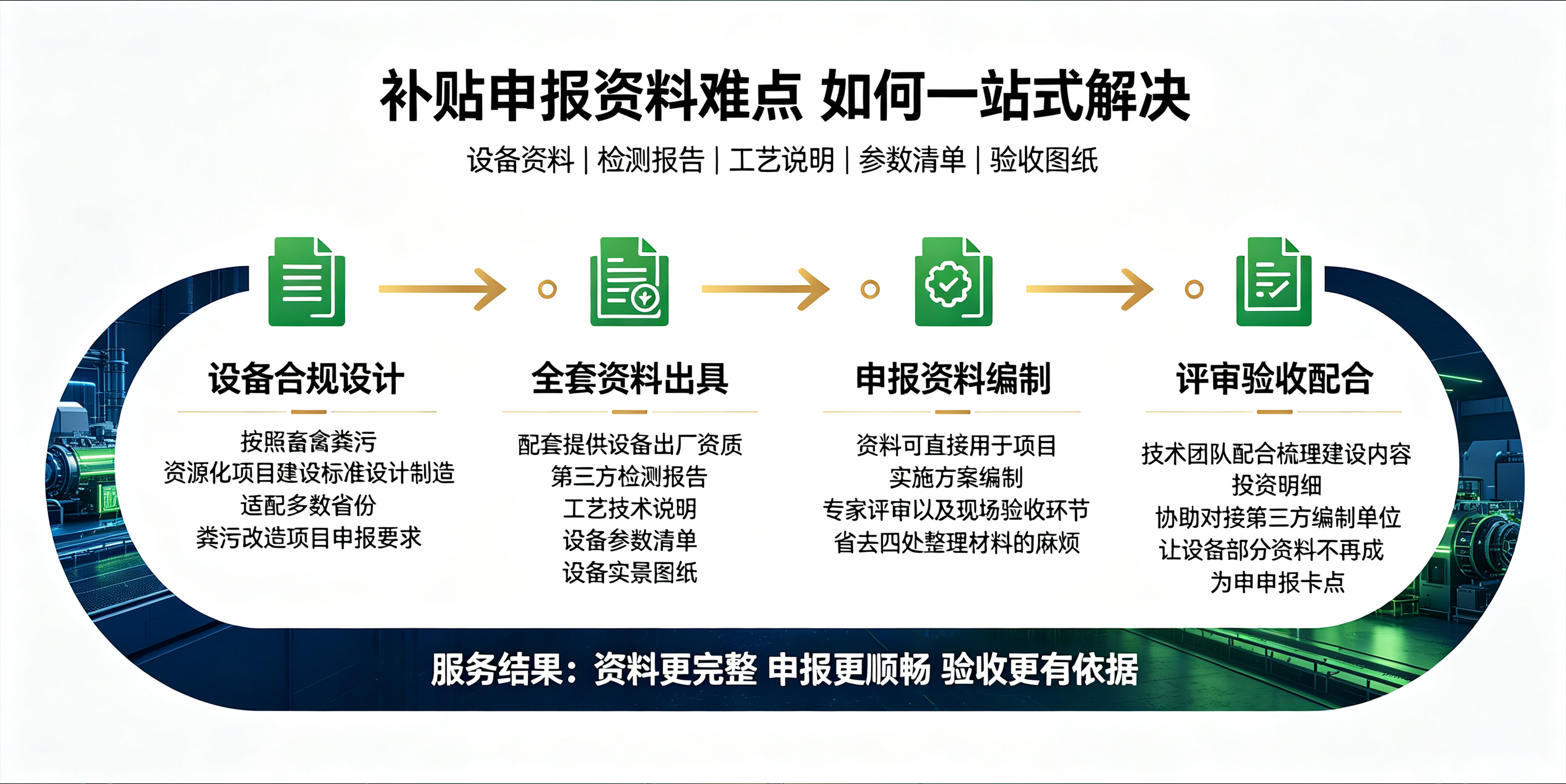
金万泓卧式闪蒸、三回程系列烘干设备,严格按照畜禽粪污资源化项目建设标准进行设计制造,适配绝大多数省份粪污改造项目申报要求。
设备出厂可配套提供:设备出厂资质、第三方检测报告、工艺技术说明、设备参数清单、设备实景图纸等全套资料,可直接用于项目实施方案编制、专家评审以及现场验收环节,省去客户四处整理材料的麻烦。
同时技术团队可配合客户梳理设备部分的建设内容、投资明细,协助客户对接第三方编制单位,让设备部分资料不再成为申报卡点。
IV. Jinwanhong Equipment Compliant for Local Subsidy Applications: One‑stop Provision of Full Acceptance Documentation
Jinwanhong horizontal flash dryers and three‑pass dryers are designed and manufactured in strict accordance with construction standards for livestock‑manure resource‑utilisation projects and satisfy application requirements for manure‑renovation initiatives in most provinces.
Upon delivery, complete documentation is supplied: factory qualifications, third‑party test reports, process technical descriptions, equipment specification sheets and construction drawings. These materials can be directly used for proposal drafting, expert evaluation and on‑site acceptance, relieving customers of burdensome document collation.
Meanwhile, the technical team assists clients in sorting out construction scopes and investment breakdowns for equipment sections and supports liaison with third‑party drafting agencies, preventing equipment‑related paperwork from becoming application bottlenecks.
五、完整申报全流程拆解:立项→报备→施工→验收→拨款
主流的先建后补项目,完整流程分为七大关键步骤,每一步都不能省略:
第一步:政策研读与项目储备 关注当地农业农村局发布的年度项目申报通知,核对自身养殖规模、手续是否符合申报条件,提前把烘干改造纳入项目储备库。
第二步:编制实施方案,提交立项申报 编制项目实施方案,包含建设目标、工艺路线、设备清单、投资预算、绩效指标,连同营业执照、环评备案、场区图纸等材料,向乡镇/县级主管部门提交申报。
第三步:评审公示,拿到项目批复 主管部门组织材料评审、必要时现场核查,评审通过后对外公示,下达正式项目批复文件,确定补助比例与建设期限。
第四步:项目施工建设,留存全过程凭证 按照批复方案开展设备采购、安装施工,完整留存采购合同、发票、付款凭证、设备照片、施工影像资料,建立项目相关台账。
第五步:项目完工,提交验收申请 设备调试投产,稳定运行后,整理全套竣工资料,向主管部门提交竣工验收申请。
第六步:现场核查验收 主管部门联合相关单位开展现场核验,核查设备是否真实落地、运行工况、环保配套、台账资料是否达标。
第七步:验收合格,拨付补助资金 验收通过完成资料归档,按财政流程拨付补贴补助资金。
V. Complete Application Workflow Breakdown: Initiation → Filing → Construction → Acceptance → Fund Disbursement
For mainstream build‑first‑subsidy‑later projects, seven indispensable key stages form the full procedure:
Step 1: Policy research and project reserving Review annual project application notices released by the local Bureau of Agriculture and Rural Affairs. Verify farm scale and formal compliance and include drying‑renovation plans in the project reserve pool in advance.
Step 2: Compile implementation plan and submit initiation application Prepare a project implementation plan covering construction objectives, process routes, equipment lists, investment budgets and performance indicators. Submit together with business licence, EIA filing, site drawings and other documents to township‑ or county‑level competent authorities.
Step 3: Review, public notice and project approval Competent authorities conduct document review and on‑site inspections when necessary. Approved projects are publicly announced, followed by official approval documents specifying subsidy ratios and construction timelines.
Step 4: Project construction and retention of full‑process evidence Proceed with equipment procurement and installation in accordance with approved proposals. Keep complete procurement contracts, invoices, payment vouchers, equipment photographs and construction footage, and maintain dedicated project ledgers.
Step 5: Project completion and acceptance‑application submission After equipment commissioning and stable operation, assemble full completion documentation and submit a completion‑acceptance application to competent authorities.
Step 6: On‑site inspection and acceptance Competent authorities together with relevant departments conduct on‑site verification, checking actual equipment installation, operating conditions, environmental‑protection auxiliaries and ledger compliance.
Step 7: Qualified acceptance and subsidy disbursement Upon passing acceptance, documents are archived and subsidy funds are released following fiscal procedures.
六、高频申报误区和审核重点,这些坑一定要避开
✅不要先全部干完再申报:很多地区不支持已经完工的项目进行申报,容易直接失去申报资格。
✅投资预算前后数据要统一:申报方案预算、采购合同、发票金额要逻辑匹配,数据冲突会直接驳回材料。
✅重视现场运行效果:验收不只看纸面资料,会实地看设备能不能连续稳定运行,不能只当摆设。
✅严禁套用往年已拿过同类财政资金的项目重复申报;失信、环保处罚记录会直接影响申报资格。
✅分清省级、市级、县级项目,不同项目申报时间、材料模板不一样,以当地当年官方文件为准。
VI. Frequent Application Pitfalls and Review Priorities to Avoid
✅ Do not finish construction before applying: Many jurisdictions reject applications for already‑completed projects, resulting in automatic disqualification. ✅ Ensure consistent budget figures: Figures in application proposals, procurement contracts and invoices must be logically consistent; data discrepancies trigger direct rejection. ✅ Prioritise real‑world operating performance: Acceptance relies not only on paperwork but also on on‑site verification of continuous stable equipment operation; equipment cannot remain idle for show. ✅ Re‑application for projects previously awarded similar fiscal funds is prohibited; bad‑faith records and environmental‑protection penalties disqualify applicants. ✅ Distinguish provincial, municipal and county‑level projects. Application timelines and document templates differ; always follow local official annual documents.
七、真实申报落地案例参考
近几年,已有多家规模蛋鸡场、肉鸡场、粪污集中处理中心,选用金万泓烘干设备完成粪污资源化改造,顺利通过项目验收拿到对应补贴。
有万羽级蛋鸡养殖场,完成卧式闪蒸烘干成套设备改造,补齐环保短板,既解决鸡粪乱堆、异味扰民的环保难题,同时完成项目验收,拿到对应专项补助,有效降低设备改造投入。
也有区域性粪污集中处理中心,配套三回程烘干产线,纳入当地种养循环示范项目,享受项目专项奖补,实现粪污集中处置与资源化外销双向收益。
每一个项目地域政策不一样,补助比例、申报周期各不相同,案例仅供参考,实际以当地主管部门审核结果为准。
VII. Reference for Real‑world Application Cases
In recent years, numerous large‑scale layer farms, broiler farms and centralised manure‑treatment centres have adopted Jinwanhong drying equipment for manure‑resource‑utilisation retrofits, successfully passing project acceptance and obtaining corresponding subsidies.
One ten‑thousand‑head‑scale layer farm completed renovation with a full set of horizontal flash drying units, resolving environmental‑protection issues including scattered manure stockpiles and odour nuisances. The project passed acceptance and secured special subsidies, effectively lowering renovation investment costs.
A regional centralised manure‑treatment centre deployed a three‑pass drying production line, incorporated into a local planting‑breeding circular‑economy demonstration project. It obtained special project incentives and achieved dual‑source revenue from centralised manure disposal and sales of recycled manure products.
Policies, subsidy ratios and application cycles vary by location. Cases serve for reference only; final outcomes are subject to reviews by local competent authorities.
写在最后
政策补贴是红利,但不是天上掉馅饼。想要顺利拿到补助,核心在于:主体合规、工艺达标、资料齐全、流程不走样。
选对合规设备,提前规划申报,才能真正把政策红利转化为养殖场实实在在的降本收益。
如果你正在规划粪污烘干改造,想要了解设备适配申报相关细节,欢迎咨询金万泓机械。
Policy subsidies represent benefits, yet they do not come for free. Successful subsidy acquisition hinges on compliant applicant status, qualified processes, complete documentation and strict procedural adherence.
Selecting compliant equipment and planning applications in advance enables farms to translate policy dividends into tangible cost‑reduction benefits.
If you are planning a manure‑drying renovation and wish to learn details regarding subsidy‑adapted equipment solutions, please contact Jinwanhong Machinery.