【引言】
2026 年畜禽养殖环保监管持续收紧,同时省级粪污资源化项目补贴红利全面释放。很多养殖场老板只知道要整改环保,却不了解设备改造可以申领财政补贴、享受税费减免。合规升级粪污处理设备,既能规避罚款整改风险,还能争取政策资金,降低改造成本。本文把最新补助标准、申报条件、申报流程一次性讲透。
Introduction
In 2026, environmental‑protection supervision for livestock and poultry breeding continues to tighten, while provincial subsidy incentives for manure resource‑utilization projects are fully rolled out. Many farm operators are only aware of the need for environmental rectification, yet remain unaware that equipment upgrading qualifies for fiscal subsidies and tax breaks.
Upgrading manure‑treatment facilities in compliance with regulations can not only avoid penalties and mandatory rectification orders, but also secure policy funding to cut renovation costs. This article gives a full breakdown of the latest subsidy standards, eligibility criteria and application procedures.
一、2026 省级畜禽粪污资源化提升项目政策解读
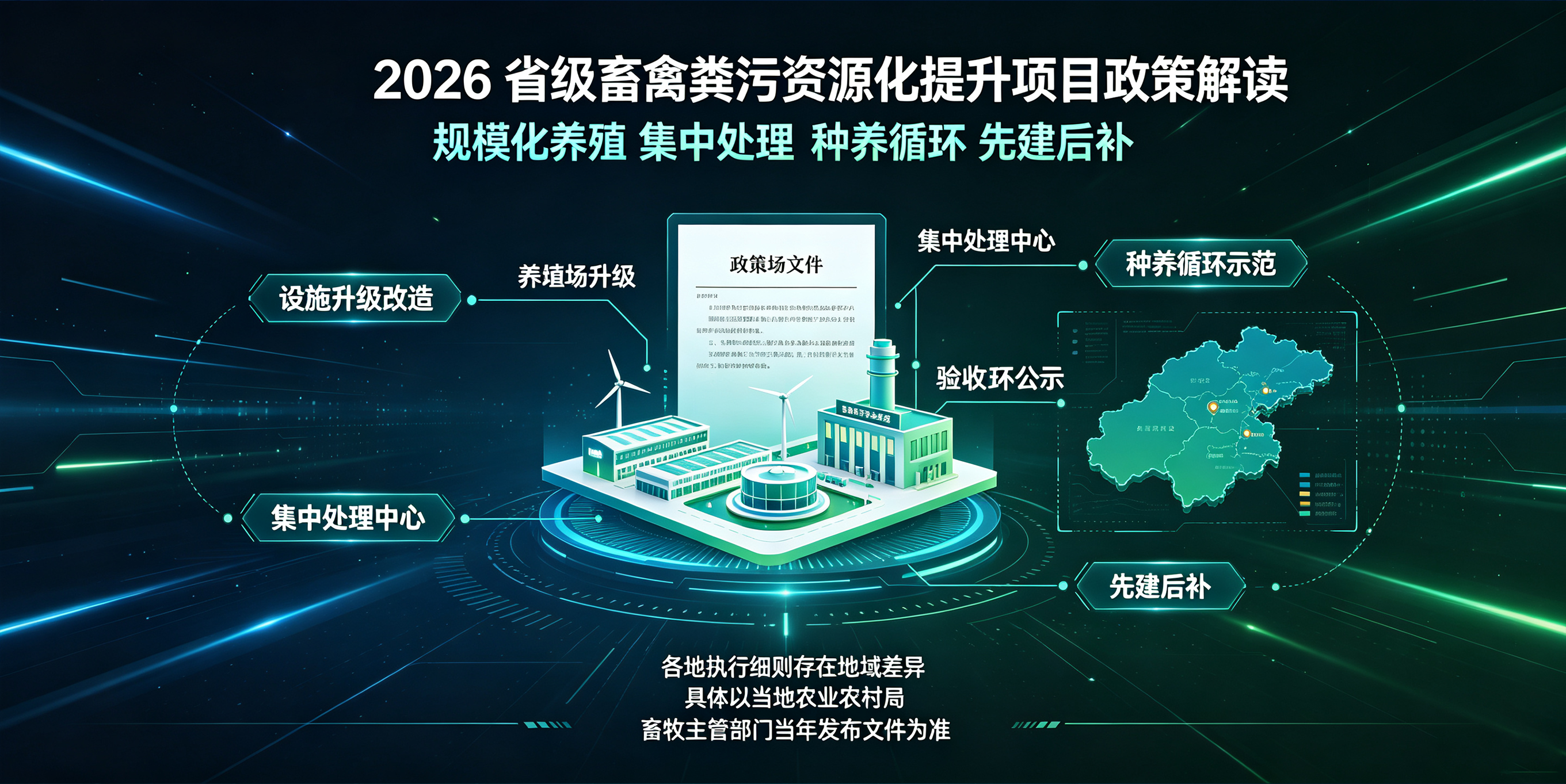
依据 2026 各省份畜禽粪污资源化提升项目最新政策,当前养殖行业支持方向重点倾斜规模化养殖场粪污设施升级改造、粪污集中处理中心建设、种养循环示范项目。项目普遍采用先建后补模式:企业先行完成设备采购、安装调试、项目落地,验收公示合格之后,财政拨付奖补资金,不是直接预付工程款。
提示:各地执行细则存在地域差异,具体以当地农业农村局、畜牧主管部门当年发布文件为准。
I. Policy Interpretation of 2026 Provincial‑Level Livestock‑Poultry Manure Resource‑Utilization Improvement Projects
According to the latest 2026 provincial policies for livestock‑poultry manure resource‑utilization improvement projects, priority support is given to upgrading manure‑treatment facilities at large‑scale breeding farms, building centralized manure‑treatment centers, and demonstration projects for planting‑breeding circular economy. Most projects adopt the post‑subsidy after‑construction model: enterprises complete equipment procurement, installation, commissioning and project implementation at their own cost first. Fiscal incentive funds will be disbursed only after passing acceptance and public announcement, instead of advance payment of construction funds.
Note: Implementation rules vary across regions. Please refer to official documents released in the current year by the local Department of Agriculture and Rural Affairs and animal husbandry competent authorities for specific requirements.
二、三大政策红利,实实在在降低养殖改造成本
✅红利一:设备改造项目最高补贴总投资 50%规模化鸡场粪污无害化处理成套设备改造,纳入省级项目重点奖补范畴。项目总投资补助比例最高可达 50%。 涵盖粪污烘干处理主机、密闭收集、除臭除尘等成套环保装备。改造达标、资料齐全、验收通过即可申领补贴,大幅压缩企业自主投入成本。
✅红利二:有机肥生产免征增值税,固废综合利用多项税费减免 畜禽粪便加工生产有机肥产品,符合条件可享受资源综合利用增值税优惠政策;企业固废资源化处置劳务,可适用增值税即征即退相关政策。固体废物做到合规综合利用,符合国家标准可免征环境保护税。项目落地后,企业可同步向税务部门申请对应税费减免,长期降低企业经营税负。
✅红利三:养殖集中处理中心、种养循环示范项目专项奖补 对于区域粪污集中处理中心、种养循环示范基地,设置独立专项奖补资金。多家养殖场联合共建集中处理站点,将鸡粪统一收集、集中烘干处置,做成有机肥原料,不仅可以申报设施设备补贴,还可申报示范项目专项奖励,适合养殖聚集区抱团改造。
II. Three Policy Dividends to Substantially Cut Farm Renovation Costs
✅ Dividend 1: Equipment‑renovation subsidies up to 50 % of total investment
Upgrading complete harmless manure‑treatment equipment for large‑scale chicken farms falls under key provincial incentive‑subsidy categories. The subsidy ratio for total project investment can reach as high as 50 %. It covers complete environmental‑protection equipment including manure‑drying main units, closed collection systems, and deodorization‑dust‑removal facilities. Subsidies are available upon meeting renovation standards, submitting complete documentation and passing official acceptance, greatly reducing self‑funded investment by enterprises.
✅ Dividend 2: VAT exemption for organic‑fertilizer production and multiple tax reductions for solid‑waste comprehensive utilization
Qualified organic‑fertilizer produced from livestock and poultry manure can enjoy VAT preferential policies for comprehensive resource utilization. Enterprises providing solid‑waste recycling services may apply for VAT refund‑upon‑payment policies. Solid waste processed in compliance with national standards for comprehensive utilization may be exempted from environmental‑protection tax. After project commissioning, enterprises may apply to tax authorities for corresponding tax relief to lower long‑term operational tax burdens.
✅ Dividend 3: Special incentives for centralized manure‑treatment centers and planting‑breeding circular‑economy demonstration projects
Dedicated special incentive funds are available for regional centralized manure‑treatment centers and planting‑breeding circular‑economy demonstration bases. Multiple breeding farms may jointly build centralized treatment stations for unified collection, drying and processing of chicken manure into organic‑fertilizer raw materials. Such projects qualify not only for facility‑equipment subsidies, but also for special demonstration‑project rewards. This model is well‑suited for joint upgrading in concentrated breeding zones.
三、生态环境法典硬性约束:规模化鸡场必须配标准化无害化烘干设备
2026 年正式实施的《生态环境法典》明确要求,畜禽养殖场必须完成粪污收集、贮存、无害化处理、资源化利用,防范粪污污染、异味扰民问题,处理设施必须保障正常运行,不允许只摆设备不投产。
规模化鸡场,禁止鸡粪露天乱堆乱放,简单堆肥晾晒已经无法满足现行法规要求,必须配套标准化无害化处理设备。如果粪污乱堆、无合规处理设施,会面临限期整改、停产整治、行政处罚,周边群众异味投诉,直接触发环保执法核查。
简单说:现在不是想不想上设备,而是合规生产必须配套无害化处置装备。
III. Mandatory Requirements under the Ecological‑Environmental Code: Standardized Harmless Drying Equipment Mandatory for Large‑Scale Chicken Farms
The Ecological‑Environmental Code of the People’s Republic of China, formally implemented in 2026, explicitly stipulates that livestock and poultry breeding farms shall complete the collection, storage, harmless treatment and resource utilization of manure to prevent manure pollution and public nuisance from odors. Treatment facilities must be kept in normal operation; idle installed equipment without actual production is not permitted.
Large‑scale chicken farms are prohibited from open‑air random stacking of chicken manure. Simple composting and sun‑drying no longer satisfy current legal requirements, and standardized harmless‑treatment equipment must be installed. Random manure stockpiling or lack of compliant treatment facilities may lead to rectification orders within a time limit, production suspension for remediation and administrative penalties. Complaints from local residents concerning odors will directly trigger environmental‑protection law‑enforcement inspections.
In short: Installing harmless‑disposal facilities is no longer an optional investment, but a legal requirement for compliant farm operation.
四、金万泓卧式闪蒸烘干设备,完全符合补贴项目申报标准,可提供全套资质材料
金万泓卧式闪蒸鸡粪烘干成套设备,密闭式烘干工艺,实现鸡粪减量化、无害化、资源化,设备工艺、环保指标均匹配畜禽粪污资源化项目申报技术要求。设备出厂具备完整设备资料、检测报告、工艺说明、环评配套材料,可协助客户整理项目申报需要的设备相关资质文件,方便企业对接主管部门申报补贴,助力项目顺利通过验收。设备投产后,烘干鸡粪可直接作为有机肥原料,打通资源化利用闭环,既过环保核查,又满足补贴项目产出指标。
IV. Jinwanhong Horizontal Flash‑Evaporation Drying Equipment: Fully Compliant with Subsidy‑Project Application Standards, Complete Qualification Documents Provided
The complete Jinwanhong horizontal flash‑evaporation chicken‑manure drying system adopts sealed drying technology to realize manure volume reduction, harmless treatment and resource utilization. Its process parameters and environmental‑protection indicators fully satisfy technical requirements for livestock‑poultry manure resource‑utilization subsidy projects.
Complete equipment documentation, test reports, process specifications and EIA supporting materials are supplied upon factory delivery. Jinwanhong assists customers in sorting out equipment‑related qualification files required for project applications, facilitating communication with competent authorities for subsidy submission and supporting smooth project acceptance.
After commissioning, dried chicken manure can be directly used as raw material for organic fertilizer, forming a closed‑loop resource‑utilization chain. It satisfies both environmental‑protection inspection requirements and output performance indicators for subsidy‑funded projects.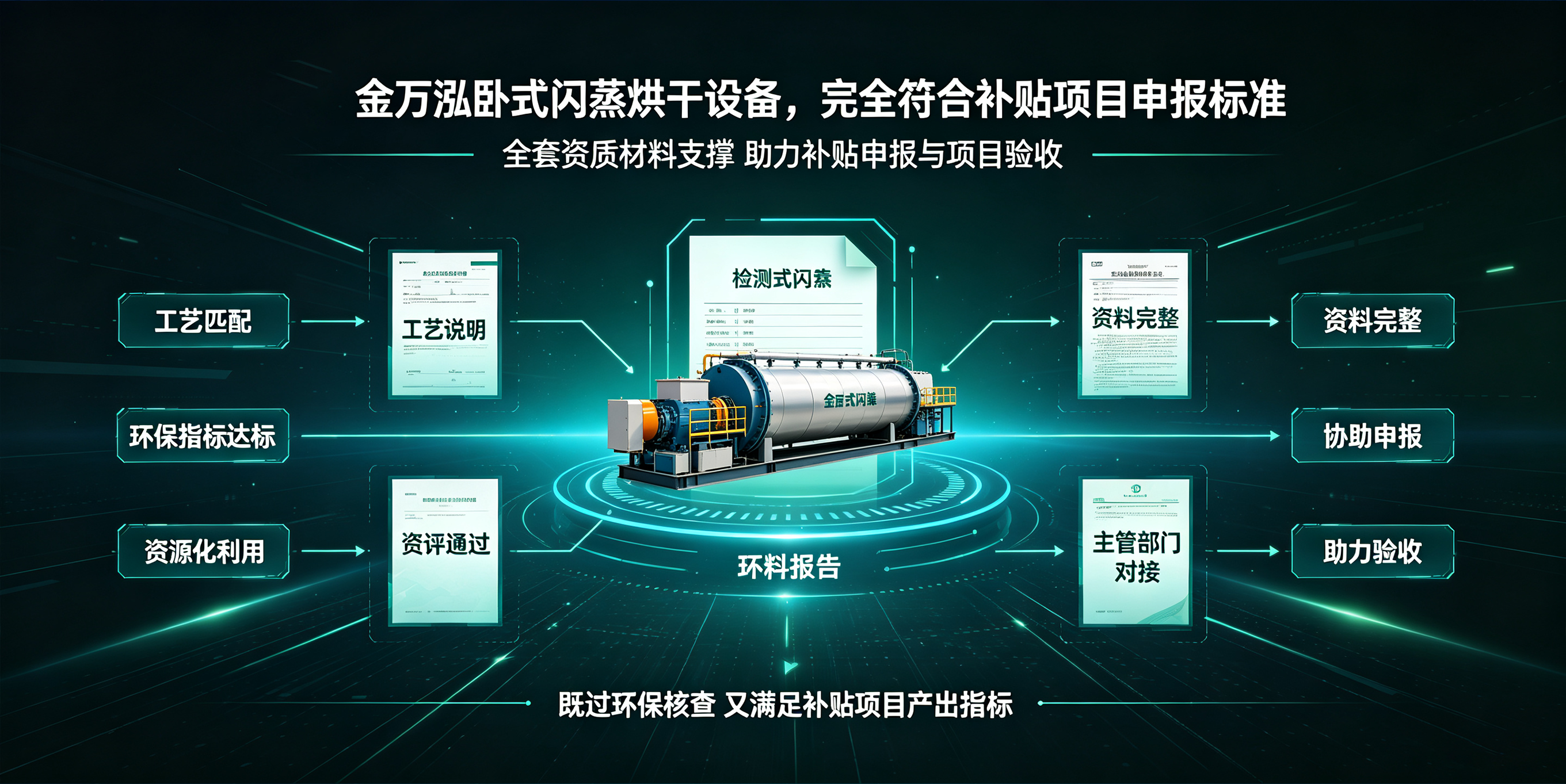
五、项目申报条件、流程、材料清单,以及成功申报案例参考
✔申报基础条件
1.养殖场完成备案,具备营业执照、动物防疫条件合格证,有正规养殖档案;
2.项目用地手续齐全,环评备案或者环评批复手续完备;
3.近三年无严重环保失信记录,无重大环保处罚记录;
4.项目为新建升级改造,同一建设内容不重复申领其他财政补贴;
5.改造完成后粪污处理设施可以常态化稳定运行,粪污实现资源化利用。
✔完整申报流程
1、政策获取:关注当地农业农村局发布的项目申报通知,把握申报窗口期;
2、前期自评:对照政策,核对自身养殖场规模、手续、场地条件,判断是否符合申报门槛;
3、编制材料:准备申报书、项目实施方案,确定设备方案与投资预算;
4、逐级上报:乡镇初审→县级主管部门审核→市级择优推荐→省级入库储备;
5、项目实施:立项批复后,采购设备进场施工安装;
6、竣工验收:项目完工,准备全套台账,迎接主管部门现场验收;
7、资金拨付:验收公示无异议后,兑现财政奖补资金。
✔成功申报案例参考
山东多处规模化蛋鸡、肉鸡养殖场,选用金万泓卧式闪蒸烘干成套设备,完成鸡粪无害化烘干改造。项目立项后完成设备安装调试,现场实现粪污密闭处理、无外溢异味,顺利通过项目验收,成功申领省级粪污资源化改造补贴,既完成环保整改,又拿到政策扶持资金。
温馨提示:补贴申报由各地农业农村、财政部门主导,设备厂家提供设备侧全套资料,申报主体为养殖场企业,具体补助金额以官方评审结果为准。
V. Project Application Eligibility, Procedures, Document Checklist and Reference of Successful Cases
✔ Basic Application Eligibility
The breeding farm is duly filed, holding a business license, animal epidemic prevention qualification certificate and formal breeding archives.
Complete land‑use formalities for the project, together with EIA filing or official EIA approval documents.
No serious environmental‑protection bad‑credit records or major environmental‑protection penalties within the past three years.
The project shall be newly‑built or renovated; the same construction content shall not receive duplicate fiscal subsidies from other programs.
Upon completion, manure‑treatment facilities shall achieve stable regular operation and realize resource utilization of livestock manure.
✔ Complete Application Procedures
Obtain policy information: Follow project‑application notices released by the local Bureau of Agriculture and Rural Affairs and seize the application window period.
Pre‑application self‑assessment: Check farm scale, formalities and site conditions against policy requirements to confirm qualification.
Document compilation: Prepare application forms and project implementation plans, and finalize equipment proposals and investment budgets.
Multi‑level submission: Preliminary review at township level → review by county‑level competent department → selective recommendation at municipal level → provincial‑level project reserve storage.
Project implementation: Procure equipment and carry out on‑site installation after obtaining project approval.
Completion acceptance: Prepare full‑set project records upon completion and receive on‑site inspection by competent authorities.
Fund disbursement: Fiscal incentive funds will be granted after acceptance and public announcement without objections.
✔ Reference of Successful Application Cases
Multiple large‑scale layer and broiler chicken farms in Shandong Province have completed harmless chicken‑manure renovation by adopting full‑set Jinwanhong horizontal flash‑evaporation drying equipment. After project approval and equipment commissioning, farms realize enclosed manure treatment with zero odor escape. Projects have smoothly passed official acceptance and successfully obtained provincial‑level subsidies for manure resource‑utilization renovation, achieving both environmental rectification and policy financial support.
Reminder: Subsidy applications are administered by local agriculture‑rural affairs and finance authorities. Equipment manufacturers provide complete equipment‑related documents, while the breeding enterprise itself acts as the application entity. Actual subsidy amount is subject to official evaluation results.
结语
2026 年,养殖行业已经进入“环保整改 + 政策扶持” 并行阶段。 与其被查到之后被动停产整改花钱,不如抓住政策窗口期,合规升级粪污处理装备,一边解决鸡粪乱堆、异味扰民的环保难题,一边争取财政补贴红利,把鸡粪变废为宝,实现减量化、无害化、资源化,走上可持续经营路线。
如果你需要评估自家鸡场是否适合申报补贴,想要获取卧式闪蒸烘干设备方案、设备配套申报资料,可以联系金万泓机械,技术人员为您免费勘测场地,定制成套粪污烘干解决方案。
Conclusion
In 2026, the breeding industry has entered an era where environmental‑protection rectification and policy support go hand‑in‑hand. Rather than facing costly forced production suspension and remediation after law‑enforcement inspections, seize the policy window to upgrade manure‑treatment facilities in compliance with regulations. This solves environmental headaches such as random chicken‑manure stockpiling and odor nuisance, while enabling access to fiscal subsidy benefits. Turning chicken manure into valuable resources realizes waste reduction, harmless disposal and resource recycling for sustainable farm operation.
If you need an assessment on whether your chicken farm qualifies for subsidies, or require proposals for horizontal flash‑evaporation drying equipment together with supporting application documents, please contact Jinwanhong Machinery. Our technical staff provide free site surveys and customize complete manure‑drying solutions for you.